Irish fishery inspections focus on ‘landing obligation’ in 2015
Over 2,745 fishing vessel inspections were undertaken within the Irish EEZ during 2015, according to provisional figures released today by the Sea-Fisheries Protection Authority (SFPA)- the State agency responsible for the verification and enforcement of EU and national sea-fisheries and food safety legislation.
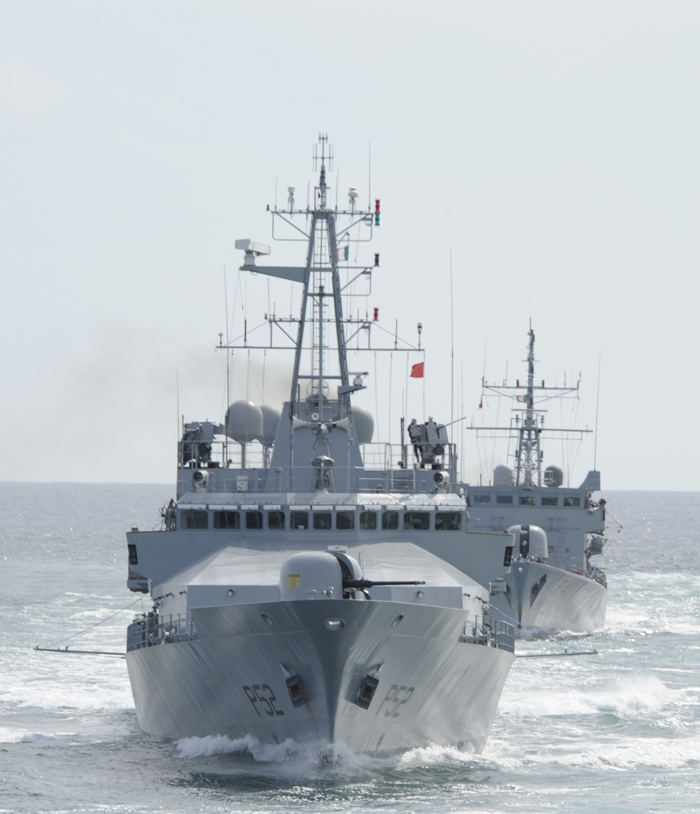
LÉ Niamh, an Irish Naval Service vessel, inspects fishing vessels at sea under a Service Level Agreement with the SFPA
Ten vessels were detained for infringements by the Naval Service which carries out all inspections at sea for the SFPA under a Service Level Agreement. These ranged from electronic reporting infringements (e.g. under-recording of catch) to incorrect equipment on board.
All vessels operating within the Irish EEZ are continuously monitored electronically and their declared catches are reviewed and assessed by the SFPA. All inspections are undertaken using Risk Analysis system guidelines to identify fishing activity and fishing vessels that are considered ‘high risk’ and require focussed inspections.
Monitoring and inspections on landing are carried out exclusively by the SFPA. During 2015, SFPA officers carried out 1,476 inspections while the Naval Service and Air Corp carried out 1,078 boardings and inspections at sea. These included vessels from Belgium; Denmark; the Faroe Islands; France; Germany; Lithuania; Netherlands; Norway; Russia; Spain and the UK.
“Ireland’s sea-fisheries and seafood sectors together are worth an estimated €850m annually to the Irish economy, and over 11,000 people rely on them for their livelihoods. The SFPA is committed to playing its part in ensuring a strong future for the Irish fishing industry through the detection of all illegal fishing,” remarked Susan Steele, SFPA chair.
In 2015 with the support of the Irish Naval Service, the SFPA prioritised implementing the new Landing Obligation for pelagic fisheries which effectively bans the discarding of fish overboard.
“The generally low level of non-compliance reflects the genuine effort on the part of many fishermen to comply with the regulations. The Landing Obligation extends to demersal fisheries on January 1, and we will be working to ensure that compliance is the norm for all vessels operating in our waters,” she added.
The SFPA will be prioritising efforts aimed at deterring those who won’t comply and supporting those who do.
In addition to their role within the Irish EEZ, the SFPA is chairing the North Western Waters Control Expert Group, leading on formulating recommendations to ensure compliance with the Landing Obligation for all pelagic fishers in North Western Waters.
As well as inspections on landings and at sea, the SFPA carried out over 146 inshore inspections across the south, west and north-west coasts from May to October, supported by the Naval Service and Air Corps and Inland Fisheries Ireland.
The patrols are part of conservation measures introduced by the SFPA to help protect the long-term sustainability of Ireland’s valuable crab, lobster and whelk fisheries.
The SFPA also worked closely throughout the year with the European Fisheries Control Agency (EFCA) and the regulatory authorities of other relevant Member States to develop the annual Joint Deployment Plan (JDP) for pelagic and cod fisheries. (The JDP co-ordinates the pooled national resources across Member States’ waters to ensure efficient monitoring, control and surveillance of vessels engaged in the fishery.)
During 2015, the SFPA also carried out Common Control Programme (CCP) inspections relating to the hake fishery with Spain, France and United Kingdom. This included the exchange of sea-fisheries inspectors with SFPA inspectors to observe landings in Spanish ports and time onboard on Spanish patrol vessels. These exchanges are designed to enhance the SFPA’s knowledge of Member States vessel activities in the Irish EEZ.
The SFPA participated in 45 inspections at sea as part of JDP and CCP patrols over the course of the year.
The SFPA also enforces the EU Common Fisheries Policy and sea-fisheries law generally, along with food safety law relating to fish and fishery products. Its mandate covers all fishing vessels operating within Ireland’s 200 mile limit; over 2,115 Irish registered fishing vessels wherever they operate, and all seafood produced in Ireland’s 170 seafood processing companies.
www.sfpa.ie