
Aquaculture licence refused on grounds of poor flushing in location
Brian Moore
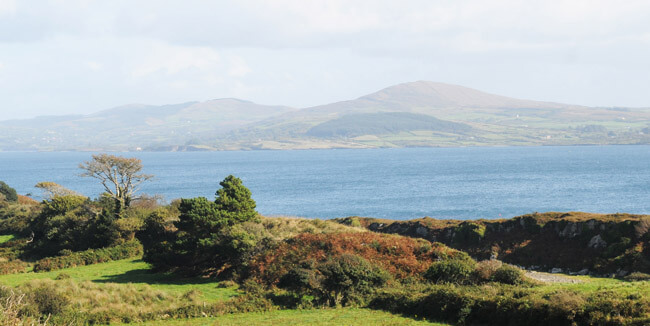
Plans for a new mussel farm in Dunmanus Bay have received a major setback with the refusal by the Aquaculture Appeals Board to grant the company a licence.
Dunmanus Bay Mussels Ltd applied to the Minister for Agriculture Food and the Marine, Simon Coveney, for an aquaculture and foreshore licence to begin operations in the waters between the Mizen and Sheep’s Head peninsulas in West Cork.
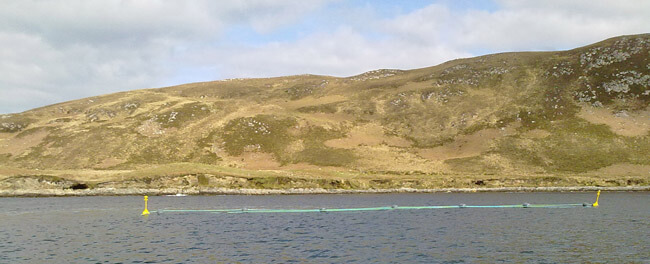
Dunmanus Bay. Photo Brian Moore
While the licence was granted by the department, a group including local residents – the Association of Dunmanus Bay fishermen – the Dunmanus Bay Marine Association and the Friends of the Irish Environment, launched an appeal to the AAB.
Salmon farm says its expansion concerns are ‘misplaced’
Brian Moore
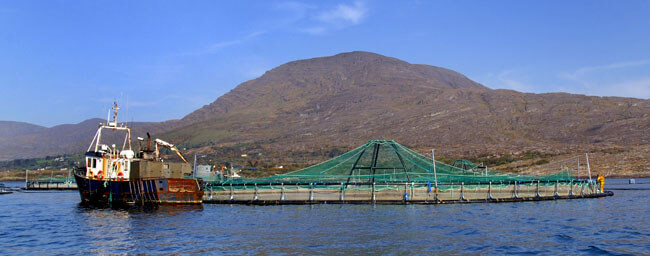
People living on the Beara Peninsula are being called on to unite and stop the proposed expansion of the Marine Harvest salmon farm at Shot Head in Bantry Bay.
Over 7,000 homes have received leaflets produced by the Save Bantry Bay (SBB) committee detailing the fears and concerns the committee has with the development of a new salmon farm.
“We need to make the people who live and work in Bantry Bay aware of what Marine Harvest plans to do and what effect this will have on the environment – both above and below the water in the bay,’ SBB secretary Alec O’Donovan told Inshore Ireland.
Aquaculture values county-by-county in 2011
Benen Dallaghan, BIM
Starting in the northeast, county Louth produced over €1m worth of gigas oysters and €1.4m of bottom mussel. In general, demand for gigas is strong, partly due to the mortalities in France.
In Co Wicklow, freshwater trout production was valued at €891,000. This figure particularly reflects the demand for high-quality trout product in the domestic market.
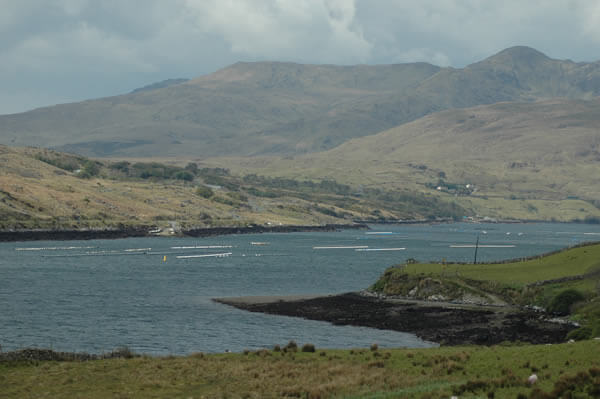
Mussel farming in Killary Fjord. Photo Gillian Mills
From a shellfish point of view, even though there is no on-growing in counties Westmeath, Dublin and Wicklow, seed mussel is taken from their coastal waters and is a valuable resource to the bottom mussel industry.
 https://oceanfocus.ie/wp-content/uploads/2020/05/Ocean_Focus_marine_Publication.png
0
0
Guest Writer
https://oceanfocus.ie/wp-content/uploads/2020/05/Ocean_Focus_marine_Publication.png
Guest Writer2012-12-28 14:10:042019-02-14 10:35:35Seaweed: a rich source of vitamins and bioactive compounds
https://oceanfocus.ie/wp-content/uploads/2020/05/Ocean_Focus_marine_Publication.png
0
0
Guest Writer
https://oceanfocus.ie/wp-content/uploads/2020/05/Ocean_Focus_marine_Publication.png
Guest Writer2012-12-28 14:10:042019-02-14 10:35:35Seaweed: a rich source of vitamins and bioactive compounds
Galway Bay fish farm plan on schedule despite ‘campaign of dreadful misinformation’ – BIM
BIM has confirmed that its proposal to site a large salmon farm in deep water in Galway Bay remains on schedule despite what it claims is a concerted campaign of misinformation by some who oppose the project on the grounds of scale and long-term environmental impact.
Donal Maguire, BIM’s Aquaculture Development Manager confirmed to Inshore Ireland that the Galway Bay proposal had already completed its Statutory Consultation phase and had almost come through its Public Consultation phase, which ends on December 12.
Highly automated offshore production nodes with fish cages and service platforms for personnel to transform Irish aquaculture. Artist's impression BIM
He added that this proposal was one of three that the agency would be submitting for a licence, and that it was also the first time they had undertaken a project of this type:
https://oceanfocus.ie/wp-content/uploads/2020/05/Ocean_Focus_marine_Publication.png
0
0
Guest Writer
https://oceanfocus.ie/wp-content/uploads/2020/05/Ocean_Focus_marine_Publication.png
Guest Writer2012-10-19 14:21:112019-02-14 09:27:38Consolidation initiative to revitalise sustainable salmon farming in south Connemara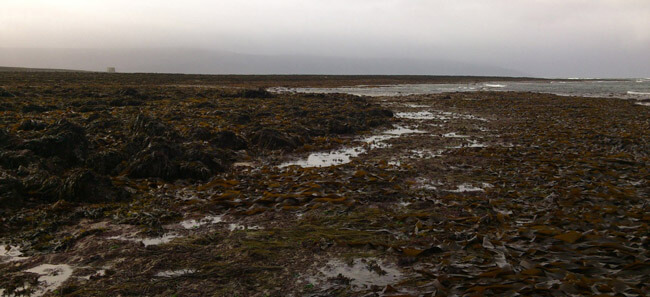
Seaweed – an untapped source of protein and bioactive compounds for aquaculture
Simon Faulkner, Ocean Harvest Technology
Seaweed is fast gaining a reputation as the ideal sustainable food source. Certainly, the nutritional properties of seaweeds are both unique and interesting, with some seaweeds having protein levels as high as 47%. Seaweed, therefore, represents an untapped source of protein and has great future potential.
As the global population continues to rise, the need for sustainable, alternative sources of protein also increases. In fact, it is estimated that the worldwide requirement for food will increase up to 50% by 2030, thus highlighting the absolute need for sustainable development.
Recently, Ocean Harvest Technology worked in collaboration with a number of research institutes to evaluate the use of different seaweeds as a sustainable protein source for aquaculture.
Seaweed found on Ireland's west coast
Why seaweed protein?
Protein is the most expensive constituent of fish feed whereby global expenditure exceeds €1bn per annum. Fishmeal is a high-protein animal feed used extensively in aquaculture but uses wild fish stocks to feed farmed fish and is an unsustainable feed resource.
Marine biomass to supplement world energy requirements?
Declan Hanniffy, Research Coordinator, OceanFuel Ltd
Today around 90% of the world’s energy consumption derives from the combustion of fossil fuels, i.e. coal, oil and natural gas are in limited supply and will one day run out. As a result, the quest for renewable energies – energies generated from natural resources such as sunlight, wind, tides, etc and from industrial or urban waste and biomass – started decades ago. Induced by numerous studies and energy conferences, the 27 Member States of the EU decided in 2007 that 20% of energy should come from renewable sources by 2020 (Lisbon Treaty).
Cultivating seaweed
There is a need to fulfil our energy consumption in a renewable and sustainable way, and aquatic biomass could be one source of this energy. Since the available area for cultivation at sea is so much larger than on land (70% of the earth’s surface is ocean) and growth rates of macroalgae (also commonly known as seaweed) are much higher than for conventional land crops, the potential for biomass production at sea is enormous.
Seaweed protein, properties and possibilities in aquaculture
Dr Stefan Kraan
Ocean Harvest Technology
Seaweed is a natural and sustainable ingredient with a lot of different functional biological properties, amongst them protein. Protein are biochemical compounds comprising one or more polypeptides typically folded into a globular or fibrous form that facilitate biological functions in the body.
Although the structure and biological properties of seaweed proteins are still poorly documented, the amino acid compositions of several species have been known for a long time. Habitat – and especially seasonal variation – has an effect on proteins, peptides and amino acids in seaweed.
Small fish being tested with seaweed protein pellets
The protein fraction of seaweed varies with the species but is generally low in brown seaweed, <15%. Higher protein contents are recorded for green and red seaweed, up to 40%. These levels are comparable to those found in high-protein vegetables such as soybeans.