
Seaweeds found to combat diseases in farmed animals
Dr Stefan Kraan Ocean Harvest Technology
Producers of farmed animals ― be they pig, shrimp or salmon farmers ― have to deal with very specific and often costly issues associated with growth and disease. Viral and bacterial diseases adversely affect feed conversion ratio and weight gain because the animal diverts energy in a bid to combat infection.
Large biomass available of specific brown seaweeds for extraction of valuable compounds for immune stimulation
The key of course is to prevent such pathogens gaining a foothold in the first place, allowing them to become established and infectious. One system that helps is the innate immune system; in other words, the body’s own basic defense mechanism which operates besides the adaptive or acquired immune system that is dependent on vaccinations etc.
Creed commits to independent review of aquaculture licensing
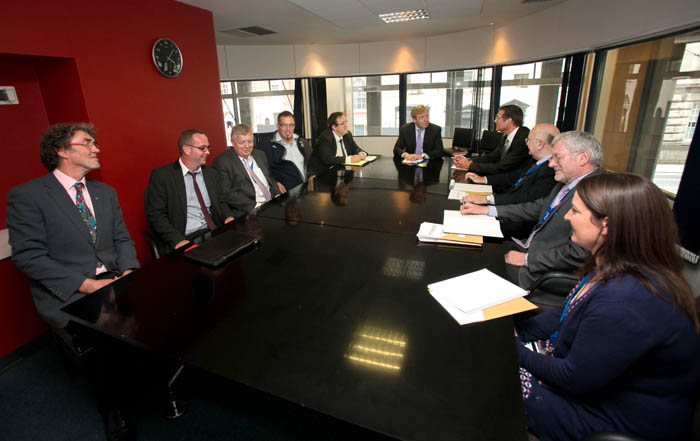
IFA Aquaculture officers from the fish and shellfish farming sectors have met with the new Minister for Agriculture, Food and the Marine, Michael Creed, to discuss issues affecting their sectors.
Chairman of the Irish Shellfish Association, Michael Mulloy, and chairman of the Irish Salmon Growers’ Association, Damien O’Keefe, pressed the minister on the urgent need for a licencing system that was ‘fit-for-purpose’ to meet highest environmental standards, and customer requirements for greater supply of top quality Irish seafood.
The national policy document, Foodwise 2025, commits to expanding the industry and to reviewing licencing. The industry is currently worth €149m at primary production level and supports 2.3 jobs in the wider community for every on-farm employee. The industry currently employs 1,841 around the coast and in freshwater facilities inland.

Undaria: the latest invasive seaweed species to reach Ireland
Dr Stefan Kraan, Ocean Harvest Technology
With seaweed being heralded as the superfood of the 21st century, many Irish people will be familiar with Wakame (Undaria pinnatifida), the edible brown seaweed - or sea vegetable – with a subtly sweet, nutty flavour, popular in Asian cusine, as an ingredient in healthy snack foods and a tasty additive for soups and salads.
Undaria growing in Kilmore Quay, Co Wexford
A member of the kelp family of seaweeds, Wakame is a native of the Pacific where it has been wild harvested for generations and more recently has been cultivated in large quantities for human consumption.
Aquaculture & Seafood Ireland 2016
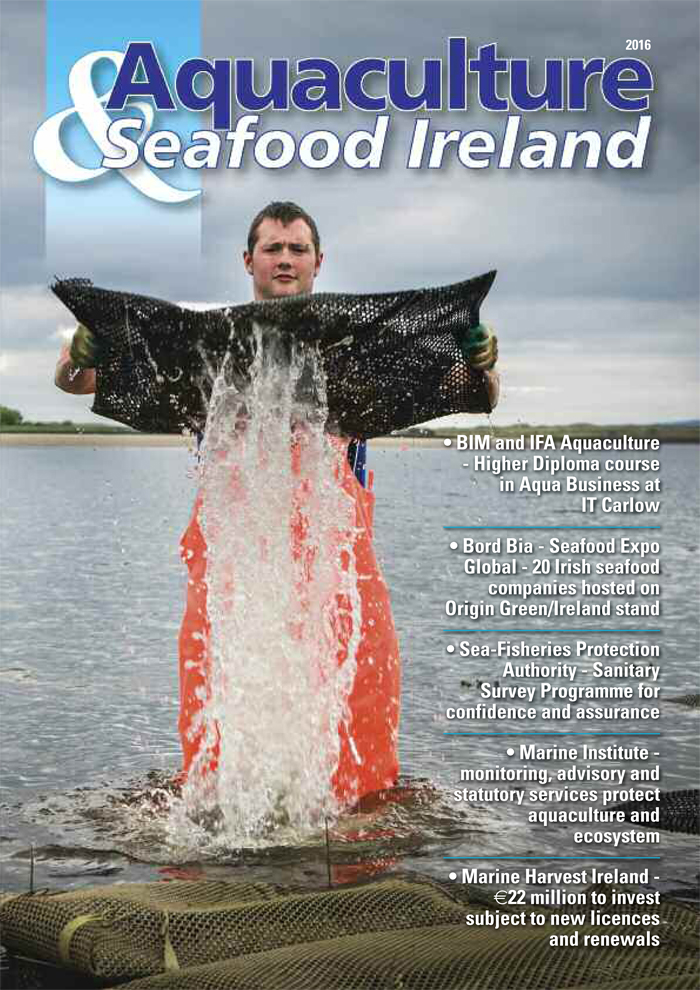
The bumper 72-page Aquaculture & Seafood Ireland 2016 comprises news, views, reports and product information, with articles by seventeen informed contributors who know the aquaculture, fisheries and seafood industry from the inside out.
BIM’s Ian Mannix reports that the domestic Irish retail market for seafood is now valued at over €210m per annum and is serviced by 130 independent seafood retailers and over 400 supermarket seafood counters around the country.

Aquaculture plays ‘key role’ in local employment and economy
A report on the sustainable development of Irish aquaculture has been welcomed by the Irish Farmers Association who says it supports their long-term call for a more focused and coherent policy towards marine and freshwater farming.
Richie Flynn, Executive of the Aquaculture section of the IFA, said the report, Sustainable Development in Irish Aquaculture, published by the National Economic & Social Council, recognises the key role that aquaculture plays in terms of employment and economic activity in rural areas as well as maintaining and enhancing the environment.
There is an urgent requirement now to build resilience in the aquaculture sector through an overhaul of the licensing system and this report should spur Minister Creed and the Department into action to finally tackle this issue,” he said.
Aquaculture in Ireland has ‘bright future’ – conference told
Marine Minister Michael Creed has been urged to ensure “swift and measurable action” to review procedures, reduce red tape and encourage development of the shellfish sector.
At the annual meeting of the Irish Shellfish Association, outgoing chairman Jerry Gallagher said “specific actions” were required to back up the broad aspirations of the seafood sector contained in the Programme for Government.
IFA president Joe Healy congratulates new Irish Shellfish Association chairman, Michael Mulloy (left) on his election
Coastal communities have waited too long for “affirmative action by the State” to encourage investment in aquaculture and create long-lasting jobs, he added.
Irish shellfish sector demands sea-change
Oyster, mussel and shellfish farmers are set to converge at an IFA Aquaculture conference in Athlone to discuss issues affecting domestic and international markets that employ hundreds of coastal inhabitants and generate economic development in peripheral areas.
Salmon farming in Kenmare Bay, Co Kerry
Chairman Jerry Gallagher says the 'new government' will have a lot to do implement objectives set out in Foodwise 2025; Our Ocean Wealth, the National Seafood Operational Programme.

Scientists gather to discuss seaweed potential in the Caribbean
Dr Simon Faulkner, Ocean Harvest Technology
International seaweed experts gathered in February on Sir Richard Branson’s Moskito Island in the British Virgin Islands to discuss the potential of exploiting seaweeds commonly found in the Caribbean.
Sir Richard Branson asks a question about using seaweed in animal feed
Entitled Sargassum Seaweed Phenomenon – Assessing the problem, Finding Solutions, Harnessing the Economic Benefits, the conference centred around two seaweed species: Sargassum natans and Sargassum fluitans, whose presence over the last few years in increasingly large quantities in the Caribbean region, is causing concern and will lead to a negative impact on the local tourism industry.

Aquaculture 4-year European study secures €7m funding
As concerns around sustainability of food security continue to rise, a team of European aquaculture experts are embarking on a four-year study to establish new strategies and models for sustainable growth in the industry.
The Tools for Assessment and Planning of Aquaculture Sustainability (TAPAS) project led by the University of Stirling will create cost-efficient management tools and practices for the European aquaculture sector to investigate obstacles to fish farming activity. These include: location; social interaction; potential environmental impacts and future risks.
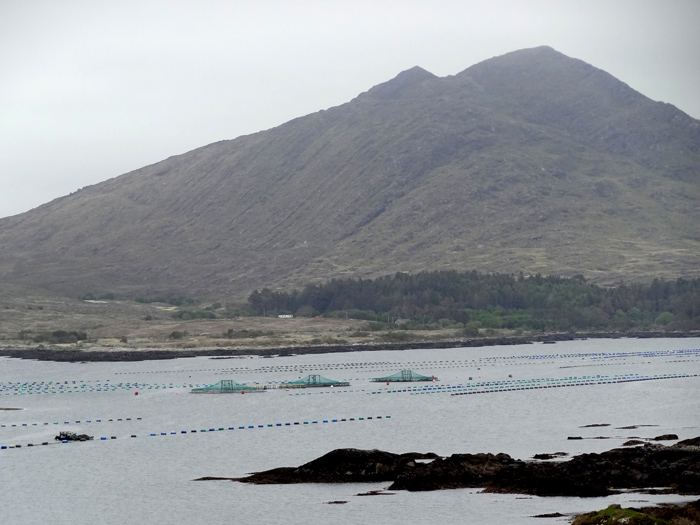
Mussel lines in Killary Fjord, north Connemara. Photo Gillian Mills
Professor Trevor Telfer, Institute of Aquaculture, is leading the multi-partnership study that aims to establish a comprehensive ‘toolbox’ to support transparent and efficient licensing; enhance environment sustainability and aquatic food security while tapping into the potential for food production and jobs.