

Seaweed-fed salmon can improve human health
Toine Wilke, health food specialist at Ocean Harvest Technology Ltd
The health benefits associated with the consumption of salmon are well known. In addition to being an excellent source of protein, vitamins and minerals, salmon represent one of the few major sources of eicosapentaenoic acid (EPA) and docosahexaenoic acid (DHA) in the human diet. Adequate intake of both these beneficial omega-3 fatty acids has been shown to significantly reduce the risk of cardiovascular disease and improve cognition.
Additional potential health benefits of omega-3 fatty acids include protection against rheumatoid arthritis, Alzheimer’s disease, depression and even some types of cancer. Notwithstanding, most people still fail to meet the recommended daily intake levels; furthermore, beneficial omega-3 levels in farmed fish are in decline ― mainly due to the increasing use of vegetable oils in fish feed.
Most seaweed contain high levels of beneficial omega-3 fatty acids
These oils partially replace the conventional ― and now scarce ― fish oils; however in contrast to fish oil, contain hardly any EPA and DHA. Is it, therefore, desirable to increase the levels of EPA and DHA in fish feed and recent research has shown that this is possible by including seaweed in the salmon diet.

Seaweeds: the answer for future global animal production
By Dr Stefan Kraan
Scientific Director of Ocean Harvest Technology Ltd
With the world population topping 7 billion last year, and forecast to reach 9 billion in 2050, we are heading for major problems regarding food production and security.
The global aquaculture industry currently produces 50% of all seafood consumed - 6% from marine fish farming. Fish farming is still the fastest growing sector, however in order to increase production to secure food production we encounter problems.
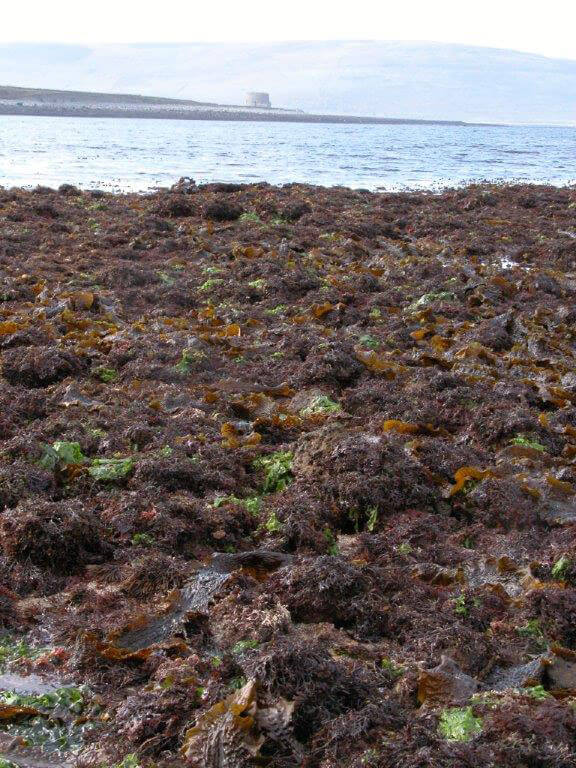
exotic looking Irish red seaweeds – a source of novel antibiotics
Fish meal is becoming expensive as a protein source to feed farmed fish, and there’s an urgent need for alternative resources other than plant protein. Chemical use also to combat disease is becoming an issue with contamination and residues in fish and increased resistance built up by the disease against these chemicals. With protein values ranging from 10-40% for certain seaweed species might very well be a part of the answer. Besides, seaweeds can bring with them other interesting bioactive molecules that could be applied via aquaculture feeds to replace currently used chemical ingredients such as colorants, preservatives, lice treatments and pre-mixes.
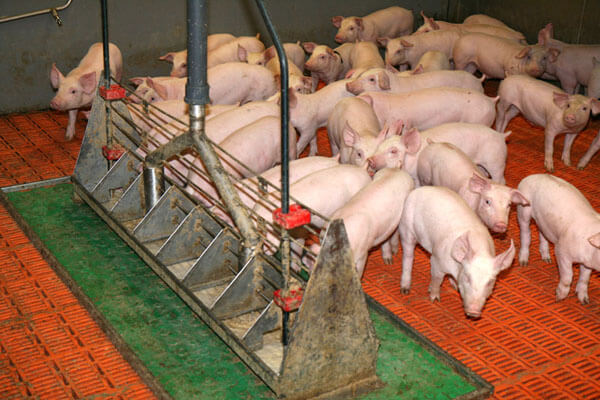
Algae as a new and sustainable resource in pig farming
Stefan Kraan, Ocean Harvest Technology
In 1986, Sweden imposed a general ban on the use of antibiotics in animal feed; the ban was followed in the EU in January 2006 and in the US in 2009.
Earlier this year, the U.S. Food and Drug Administration finalised voluntary guidance for farmers on the judicious uses of antibiotics in agriculture, and asked veterinary drug makers to voluntarily phase out medically important drugs from being available over the counter Health advocates have not relented either in their call for stronger action on the issue
On 19 September 2012, a group of 150 US scientists, including the former commissioner of the FDA, issued a statement calling on the FDA and Congress to regulate the use of antibiotics in animal agriculture.
Seaweed carotenoids: diverse nutrients from the ocean
Laura Kealy, Ocean Harvest Technology
Carotenoids are organic pigments often present at significant levels in brown seaweed and other photosynthetic organisms. As powerful antioxidants, carotenoids prevent cancer, heart disease and enhance immune response to infections. Present in all algae, higher plants and photosynthetic bacteria, carotenoids are produced from fats and other basic organic metabolic building blocks by these organisms.
And although humans are incapable of synthesising carotenoids, recent research suggests that a carotenoid-rich diet can result in improved health, reduced mortality rates and a lower instance of certain chronic diseases.
Seaweed source
In the marine environment carotenoids are widely present in seaweed, the most notable being astaxanthin, β-carotene and fucoxanthin - all of which have been reported to be effective antioxidants. Algal carotenoids have been associated with the prevention of cardiovascular and neurodegenerative diseases as well as certain types of cancer. As antioxidants, they protect the body from oxidative stress, a physiological state which is putatively involved in the development of cancer, Parkinson’s disease and Alzheimer’s disease - to name but a few.
Antioxidant activity
Fucoxanthin has recently received considerable attention due to its wide array of beneficial effects on human health. This compound has an unusual allenic bond, which is responsible for its high antioxidant activity. It is also one of the most abundant carotenoids in nature, and contributes to more than 10% of total carotenoid production.
 https://oceanfocus.ie/wp-content/uploads/2020/05/Ocean_Focus_marine_Publication.png
0
0
Guest Writer
https://oceanfocus.ie/wp-content/uploads/2020/05/Ocean_Focus_marine_Publication.png
Guest Writer2013-04-16 13:56:132019-02-14 11:08:13Seaweed versatility showcased at international seminar
https://oceanfocus.ie/wp-content/uploads/2020/05/Ocean_Focus_marine_Publication.png
0
0
Guest Writer
https://oceanfocus.ie/wp-content/uploads/2020/05/Ocean_Focus_marine_Publication.png
Guest Writer2013-04-04 08:18:192019-02-14 11:03:27International seminar to showcase seaweed versatility
https://oceanfocus.ie/wp-content/uploads/2020/05/Ocean_Focus_marine_Publication.png
0
0
Guest Writer
https://oceanfocus.ie/wp-content/uploads/2020/05/Ocean_Focus_marine_Publication.png
Guest Writer2013-04-04 08:16:462019-02-14 11:03:19Netalgae project ends but leaves foundation for sustainable European seaweed industry…
https://oceanfocus.ie/wp-content/uploads/2020/05/Ocean_Focus_marine_Publication.png
0
0
Guest Writer
https://oceanfocus.ie/wp-content/uploads/2020/05/Ocean_Focus_marine_Publication.png
Guest Writer2013-04-04 08:06:332018-08-29 13:36:04Deep-sea salmon farm project on target
https://oceanfocus.ie/wp-content/uploads/2020/05/Ocean_Focus_marine_Publication.png
0
0
Guest Writer
https://oceanfocus.ie/wp-content/uploads/2020/05/Ocean_Focus_marine_Publication.png
Guest Writer2013-04-16 13:56:132019-02-14 11:08:13Seaweed versatility showcased at international seminar
https://oceanfocus.ie/wp-content/uploads/2020/05/Ocean_Focus_marine_Publication.png
0
0
Guest Writer
https://oceanfocus.ie/wp-content/uploads/2020/05/Ocean_Focus_marine_Publication.png
Guest Writer2013-04-04 08:18:192019-02-14 11:03:27International seminar to showcase seaweed versatility
https://oceanfocus.ie/wp-content/uploads/2020/05/Ocean_Focus_marine_Publication.png
0
0
Guest Writer
https://oceanfocus.ie/wp-content/uploads/2020/05/Ocean_Focus_marine_Publication.png
Guest Writer2013-04-04 08:16:462019-02-14 11:03:19Netalgae project ends but leaves foundation for sustainable European seaweed industry…
https://oceanfocus.ie/wp-content/uploads/2020/05/Ocean_Focus_marine_Publication.png
0
0
Guest Writer
https://oceanfocus.ie/wp-content/uploads/2020/05/Ocean_Focus_marine_Publication.png
Guest Writer2013-04-04 08:06:332018-08-29 13:36:04Deep-sea salmon farm project on targetDecision awaited on salmon farm licence
With completion in December of the Public Consultation phase for BIM’s proposed €60 million deep water salmon farm in Galway Bay, all eyes are now firmly on the Department of Agriculture, Food and the Marine where Minister Coveney is faced with the unenviable task of having to decide whether or not to grant an aquaculture licence.
For those in the aquaculture industry, rejection of the application will be regarded as the death-knell for Ireland’s already ailing fin-fish farming sector, where annual production more or less flat-lined some years ago and has been on virtual life-support for some time - mainly as a result of tough but necessary EU environmental directives.