Restructuring of inland fisheries to be ‘fit for purpose’ for the 21st Century
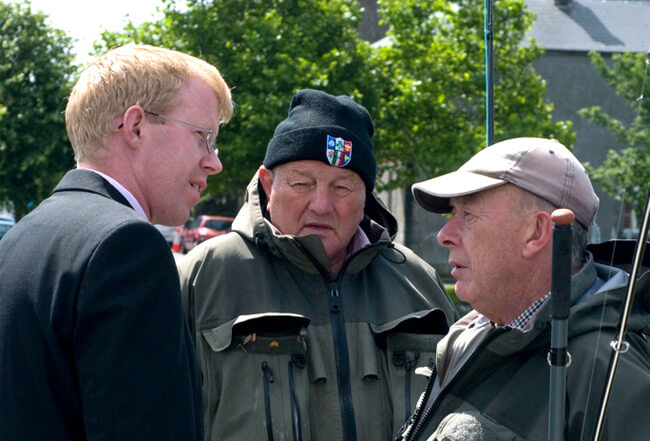
The establishment of Inland Fisheries Ireland (IFI) to replace the seventeen bodies – including the Central and Regional Fisheries Boards, the National Salmon Commission and the Fisheries Co-operative Societies - previously involved in the management of inland fisheries is the long-awaited signal that government is serious about protecting, conserving and developing this key resource.
Its CEO, Dr Ciaran Byrne, with his youthful energy, determination and vision - combined with a rare career skill set – is an assurance too that the revamped organisation is in capable hands and off to a good start.
Byrne has a degree in zoology, a post graduate diploma in statistics and a Ph.D. in fisheries parasitology from Trinity College Dublin.
A case of protecting votes at all costs?
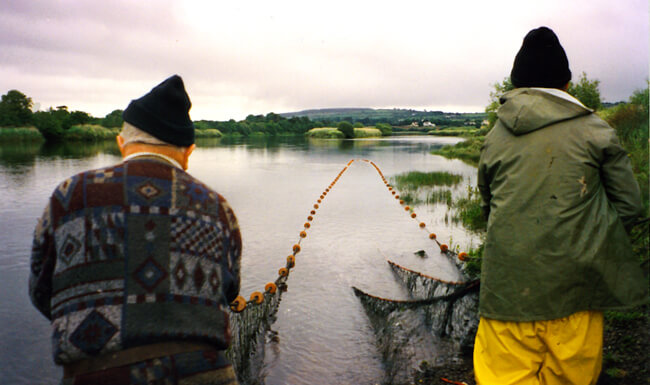
Draft-netting on the Laune Estuary, Kilorglin, Co Kerry. All commercial fishering should be confined to estuaries - not common estuaries. Photo Martin O'Farrell
Martin O’Farrell
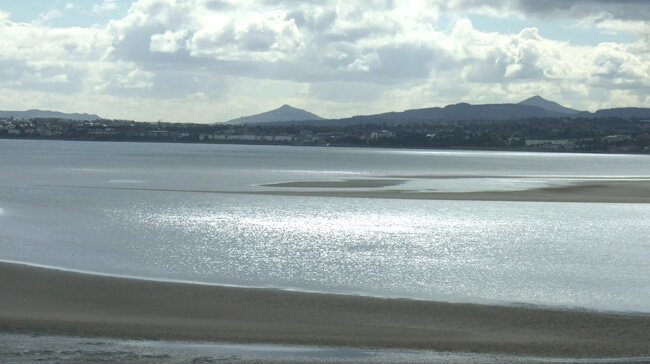
It is now proposed to commence a ‘pilot’ salmon fishery to exploit salmon returning to the Laune and Maine rivers which discharge to Dingle Bay via Castlemaine Harbour. It is also likely that adult salmon returning to the nearby Caragh and Behy rivers will be exploited in this fishery. All salmon harvested will be scientifically examined by State personnel who will police the pilot fishery.
At a time when economic gloom is all around us and Atlantic salmon populations are at an all time low, this initiative proposes to target an initial quota of 800 fish. Each fish will be typed genetically and its river of origin will be determined. It is hoped that most of the 800 will be Laune fish as this catchment has been assessed by the Standing Scientific Committee (SSC) of the former National Salmon Commission as being well above conservation limits.
 https://oceanfocus.ie/wp-content/uploads/2020/05/Ocean_Focus_marine_Publication.png
0
0
Guest Writer
https://oceanfocus.ie/wp-content/uploads/2020/05/Ocean_Focus_marine_Publication.png
Guest Writer2010-08-30 15:49:592019-02-13 17:35:45Ireland’s potential as world seafood leader threatened by delays over Habitats Directive
https://oceanfocus.ie/wp-content/uploads/2020/05/Ocean_Focus_marine_Publication.png
0
0
Guest Writer
https://oceanfocus.ie/wp-content/uploads/2020/05/Ocean_Focus_marine_Publication.png
Guest Writer2010-08-30 15:49:592019-02-13 17:35:45Ireland’s potential as world seafood leader threatened by delays over Habitats Directive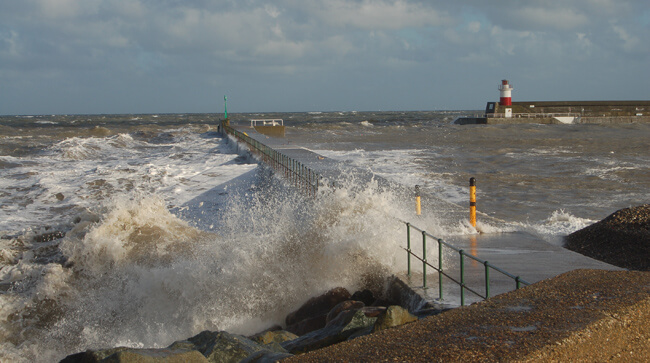
Climate Change, Heritage and Tourism: Implications for Ireland’s Coast and Inland Waterways
The frequency and severity of storms is predicted to increase greatly over the next fifty years
Heritage Council/Fáilte Ireland
Climate change presents an immediate and significant threat to our natural and built environments and to the ways of life that co-exist with these environments.
Overseas visitors choose to holiday in Ireland for many reasons, chief among them being the richness of our cultural and natural heritage. As changes to the climate affect our heritage, then they will also have implications for Ireland’s tourism industry.
In response to this, the Heritage Council and Fáilte Ireland commissioned a report in 2007, Climate change, Heritage and Tourism, Implications for Ireland’s coast and inland waterways, to investigate how climate change will affect Irish tourism and the heritage of our coastline and inland waterways with an aim to help plan for the likely eventualities and to provide recommendations to Government on prioritising action.
https://oceanfocus.ie/wp-content/uploads/2020/05/Ocean_Focus_marine_Publication.png
0
0
Guest Writer
https://oceanfocus.ie/wp-content/uploads/2020/05/Ocean_Focus_marine_Publication.png
Guest Writer2010-06-18 16:12:042019-02-13 17:31:25Ferry companies continue to reap ash dividend https://oceanfocus.ie/wp-content/uploads/2010/05/fig1.jpg
282
440
Guest Writer
https://oceanfocus.ie/wp-content/uploads/2020/05/Ocean_Focus_marine_Publication.png
Guest Writer2010-05-21 14:04:272019-02-13 17:32:23Rhetoric or real? The price of Ireland’s entry to the EU
https://oceanfocus.ie/wp-content/uploads/2010/05/fig1.jpg
282
440
Guest Writer
https://oceanfocus.ie/wp-content/uploads/2020/05/Ocean_Focus_marine_Publication.png
Guest Writer2010-05-21 14:04:272019-02-13 17:32:23Rhetoric or real? The price of Ireland’s entry to the EUReport reveals half the country’s treatment plants are below EU standards
The EPA report Urban Waste-water Discharges in Ireland (2006-2007) is a barely disguised wake-up call for local authority officials and politicians alike.
Its key findings are stark.
Despite acknowledging a marked increase in the spread and sophistication of waste water treatment plants throughout the country in the last twenty years, the report notes that without a marked improvement in the way many of them are operated and monitored, Ireland will fail to comply with the Urban Waste-water Treatment Regulation.
The cost of analysing a sample of urban waste-water is somewhere between €50-€100 per month
The fact also that 112 – or 23% - of the 482 villages, towns and cities audited still have either no waste-water infrastructure at all, or if they do, it is inadequate, should be enough to be keeping more than a few county managers and local authority officials awake at night.
And as if these findings were not sufficiently shocking, the shameful revelation in the report that 50% of waste water from Ireland’s treatment plants is failing to meet EU standards because plants are either not operating properly, or are overloaded, should make the rest of us very worried indeed.
https://oceanfocus.ie/wp-content/uploads/2020/05/Ocean_Focus_marine_Publication.png
0
0
Guest Writer
https://oceanfocus.ie/wp-content/uploads/2020/05/Ocean_Focus_marine_Publication.png
Guest Writer2010-05-18 16:13:262019-02-13 17:31:03Image of caring for environment punctured by does of reality
https://oceanfocus.ie/wp-content/uploads/2020/05/Ocean_Focus_marine_Publication.png
0
0
Guest Writer
https://oceanfocus.ie/wp-content/uploads/2020/05/Ocean_Focus_marine_Publication.png
Guest Writer2010-05-03 12:34:272019-02-13 17:30:53Scallops: safe and sustainable from tide to table