Vikings on the starboard bow
Culture/HistoryJehan Ashmore
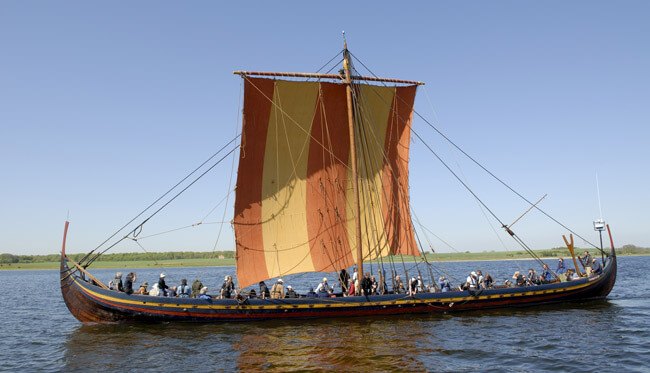
After a gap of 900 years the Vikings are coming back, well almost! In the guise of an exact replica of a Viking warship longboat, Sea Stallion of Glendalough is set to arrive into Dublin Port in mid-August having sailed from Denmark.
The journey begins in Roskilde on July 1 when the vessel sets sail for Dublin via the North Sea. Enthusiasts can keep track of the voyage on the website www.seastallion.dk.
Sea urchins: the Asian delicacy
Aquaculture
Sea urchins seem certain to appear soon on the growing list of animal and plant species being farmed commercially by the Irish aquaculture industry, after they performed well in a new type of land-based rearing system designed by the Aquaculture and Fisheries Development Unit at University College Cork
This will be welcome news for Ireland’s tiny seaweed industry, which can expect to see the knock-on benefits from supplying the sea urchins with their preferred diet of high-quality native seaweeds.
Dr Gerry Mouzakitis, a former manager of the AFDU, told Inshore Ireland that the UP System “had proven beyond doubt” that Paracentrotus lividus, a native sea urchin once plentiful in Irish coastal waters but now rare because of over-fishing “has enormous farming potential.”
He declined however to reveal any details of the UP System before it is protected by a world-wide patent due to be issued later this month.
Mouzakitis is confident however that within a decade, the new system will have revolutionised the farming of Paracentrotus lividus in Ireland and probably worldwide.

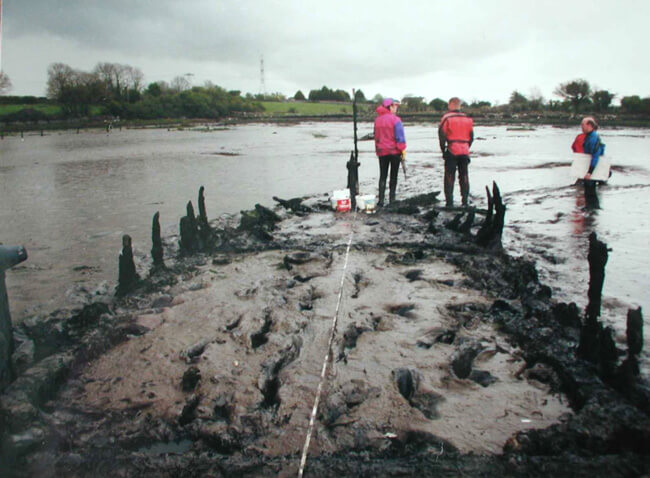
Rathcoursey hookers: gone but not forgotten
Culture/History
‘Sheer lunacy’ to consider fracking in an Irish context
Environment/Freshwater FocusTom White
After researching the shale gas industry in the US I have come to the conclusion that rather than asking ‘how do we regulate this industry’, we in Ireland should be asking ‘why are we soliciting an industry that is mired in debt?’ Because, if we're not careful, we could end up bailing out the shale gas industry here.
The shale gas industry in the US and elsewhere is facing cash flow issues with many companies spending twice as much as they are making: UK exploration company Cuadrilla has had to raise more cash than anticipated; and Chesapeake — the second largest natural gas producer in the US — is paying over 8% to refinance at a time when interest rates are at historic lows.
This is not a well industry (pardon the pun), and given the grave concerns about environmental damage; risks to public health and threats to a profitable agri-business, tourism and angling industries, it appears sheer lunacy to even consider fracking in an Irish context.

Greater stakeholder involvement in fisheries management
FisheriesA key component of the new Common Fisheries Policy, which was reformed in late 2002, was the formation of Regional Advisory Councils (RACs) to give stakeholders a greater say in the way fisheries are managed in areas they cover. The first of six bodies, the North Sea RAC, was created late last year, writes Gillian Mills.
According to the European Commission, these bodies will provide a permanent framework linking stakeholders at regional and local level and the Commission and the member states concerned. “They will enable the fishing sector to work more closely with scientists in collating reliable data and discussing ways of improving scientific advice.”
The RACs will also provide a forum for the fishing industry to enter into dialogue and to work with other interested parties on identifying options regarding the management of specific fisheries. Their recommendations and suggestions can then be submitted to the Commission and to the relevant member states.

The case for a European Union coastguard
MaritimeJohn Cushnahan, Fine Gael MEP for Munister 1989-2004 explains why
The recent tsunami in the Indian Ocean has chillingly demonstrated the danger that can lurk in the seas surrounding island countries, spelling potential disaster for coastal communities. Professor Bill Mc Guire, a hazards research expert at University College London, has warned that a collapse of the Cumbre Vieja volcano in the Canary Isles could inflict a tsunami-type catastrophe on Ireland. Before anyone starts heading for the hills, it is important to note that the experts point out that natural disasters of this type are infrequent, rarely occurring in the same century or even Millennium. In my view, a more immediate danger is more likely to be the consequence of a man-made disaster rather than a natural one.
In recent years, European coastal waters have experienced a significant increase in maritime traffic, often with horrific consequences. There have been environmental disasters: tragic loss of life in shipping accidents; criminal trafficking in drugs and human beings, and continued flagrant breaches of the Common Fisheries Policy.

Industry and science working to rebuild Celtic Sea cod
FisheriesDr Paul Connolly, Marine Institute, explains
The latest assessment for Celtic Sea cod is given in the figure below and shows the stock size since 1971. The graph indicates that the stock is ‘just at’ the safe limit of 10,000 tonnes (green dashed line); however it is predicted to go below this limit over the next few years (blue line) at current levels of fishing. The latest scientific advice for Celtic Sea cod calls for a 17% reduction in fishing mortality in order to rebuild the stock by 2006. This corresponds to a Total Allowable Catch (TAC) of 5,200 tonnes for 2005.
The cod fishery
Celtic Sea cod are taken in mixed trawl fisheries. Landings are made mainly by French trawlers targeting cod, haddock and whiting. In 2003, total international landings were 6,000 tonnes, with France accounting for 84% and UK and Ireland 6% each. Belgian vessels take about 2%. Cod landings occur throughout the year, but mainly in the winter months during November-April, with a peak in February-March.

Mapping the connection between farming and the water environment
Environment/Freshwater FocusIn an era of rapid change, farmers in Ireland are getting used to constantly assessing the most profitable and sustainable strategy for their enterprise. As part of that change, an awareness of impacts on the water environment has come to the fore, writes Gearóid Ó Riain, director, Compass Informatics.
At the same time, farm enterprises and water resources organisations alike are looking to mapping and geographic technologies to assist with decision-making and efficient management. These technological tools now play valuable roles in making the most of what both the land and the water offer, and in minimising conflicts over what happens where and when.
Another real spin-off of this awareness of the connection between farming and the water environment on one hand, and the value of geographic technologies on the other, is the employment created in companies providing these technical services and designing new solutions and tools.

Urgent action required to save premier Irish lake
Environment/Freshwater FocusDiarmuid Mucahy outlines the issues
Lough Corrib can boast many accolades: It is one of the Great Western lakes; it is a priceless regional amenity; it is one of the most significant remaining brown trout fishing lakes in Europe, and it is the source of water supplies to Galway city and a number of other local towns and villages. The lake, however, is in a state of flux. Changes to its water may be about to seriously impact on all who depend on the lake for water, for a livelihood or simply as an amenity.
Recent studies carried out by NUI Galway suggest that overall there has been no significant changes in the lake over time; however there are unquestionably localised difficulties, many of which were clearly evident last summer.
