
Diving in Dublin Bay
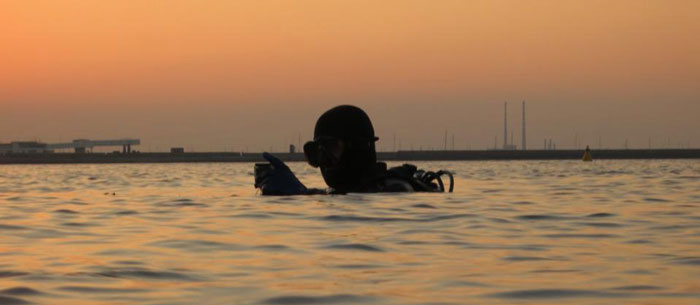
Scuba diving in Dublin Bay takes you into another world. One where you can easily and weightlessly move in three dimensions; one where there are no phones, no cars, PCs, traffic lights, buzzers and beepers. It’s only you, your buddy and your bubbles.
For many divers it is this absolute escapism that they enjoy most. For many, the concept of diving in the Irish Sea might seem a bit mad. Everyone knows that real divers only dive in warm tropical waters. While diving in the tropics is certainly a wonderful experience, there is some great diving right here on our door step.
Most people who live around the capital city are unaware of the sheer abundance and variety of marine life that thrives in the waters around Dublin. In fact, as far as European capital cities go, Dublin has probably got the most diverse and spectacular underwater environments on offer.
Dublin Bay ― from Dalkey Island at the south to Lambay Island and Rockabill at the northern end ― benefits from a staggering variety of dramatic sites that are of real interest to scuba divers.
Dalkey Island
Dalkey Island, fifteen minutes by RIB, due south of Dun Laoghaire Harbour ― is a sanctuary for bird life, complete with Martello tower, fort and church. Below the surface, the resident colony of grey seals glide gracefully between kelp covered boulders. Seals often approach divers and nibble gently on their fins rather like a playful labrador.
Large Ballan Wrasse like to lounge lazily among the many crevices and gaps in the boulder field. These are relatively big fish, typically around 25cm in length and are very territorial, returning to the same spot once the bubbling diver has passed safely.
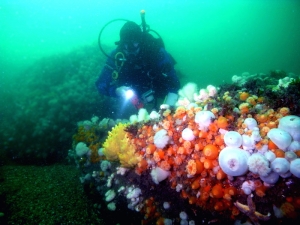
Soft corals in Dublin Bay. Photo Oceandivers
Dive a bit deeper and the kelp gives way to other forms of rock clinging life. Soft corals, yellow and white sponges and vivid plumose anemones crowd the surface of the exposed rocks living off water-born plankton carried in the passing tide.
As a diver you glide over the boulders, monitoring your depth and scanning the area with the sweep of your touch, bringing back the colour that has been filtered out by depth. Sunstars the size of dinner plates, light up purple as the torch light touches them and ling move shyly in their lairs, watching the diver pass by.
Lobsters scurry for cover with remarkable speed while large edible crabs stay and offer to fight any diver who dares. Blennies, pipe fish and small scorpion fish dart about. Below 20 metres, boulders peter out, giving way to a mixed bottom of sand and shingle with some exposed reefs of bed rock.
Dog fish swim shark-like, smelling the water for food; in this gloomy light a lucky diver might spot an octopus out and about shopping for lunch or seeking a new abode. Limited by air and depth, a typical dive here runs to about 50 minutes before the diver returns slowly to the bright lights of the surface.
High energy sites, such as the Muglins, have an even greater density of sponges, soft corals and other filter feeders growing on the rocky bed due to their exposure to very strong tides. It is only possible to dive such sites during slack water when the tide stops flowing at either high or low water. The reward is more that worth the wait.
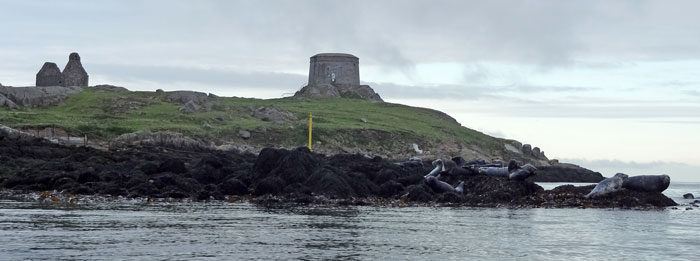
Grey seals at Dalkey Island. Photo Gillian Mills
Kish Bank
Other exposed sites include the many wrecks of the bay. There are numerous wrecks around the Kish Bank including Bolivar, Vesper, RMS Leinster and Guide Me II.
While most wrecks are protected by law (and unfortunately are not loaded with treasure) they do provide wonderful oases in the sandy seabed for marine life. They become miniature marine parks.
Safe from the nets and pots of local fishermen, large cod and pollock swim freely throughout the wrecks; these mechanical structures provide holdfasts and shelter for anyone seeking a home at sea.
Wrecks also present visual imagery that creates a unique atmosphere as divers swim between worlds, and imagines life aboard the stricken vessel before it was acquired by its current occupants.
Once bitten with the diving bug, divers travel the country enjoying some of the best diving in Europe, and indeed the world, at the pristine dive sites along the western seaboard. Like so many things in Ireland, diving is a well kept secret, but it is there for everyone who has an urge to see the world below the waves.
Modern teaching methods and professional diving instructors have made diving accessible to anyone who can swim and has the will to learn. Scuba diving is a significant recreational and tourism business that depends on a healthy and diverse marine environment if it’s to thrive.
Dubliners are fortunate to have easy access to umpteen good dive sites so close by.
Brian Murphy, Oceandivers