
Earth’s climate spirals out of control
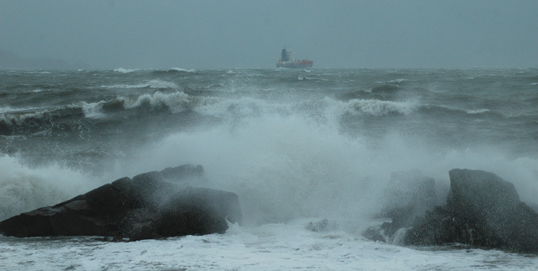
The Earth’s climate is more out of balance than at any time in observed history, as greenhouse gas concentrations drive continued warming of the atmosphere and ocean, and melting of ice.
“Planet Earth is being pushed beyond its limits. Every key climate indicator is flashing red. When history repeats itself eleven times it is no longer a coincidence. It is a call to act,” remarked UN Secretary-General António Guterres.
These are the stark warnings of World Meteorological Organization (WMO) State of the Global Climate Report 2025 which states that the ten years to 2025 were the hottest on record.
More than 91% of excess heat is stored in the ocean, which acts as a major buffer against higher temperatures on land. Ocean heat content (to a depth of 2,000 metres) reached the highest level since records began in 1960. Each of the past nine years has set a new, record high.
Shrinking ice sheets
Another 3% of excess energy melts ice and is driving the long-term rise in global mean sea level, which has accelerated since satellite measurements began in 1993. The ice sheets on Antarctica and Greenland have both lost significant mass, and the annual average Arctic sea-ice extent for 2025 was ‘the lowest or second lowest on record in the satellite era’.
Ocean warming has far-reaching consequences, such a degradation of marine ecosystems, biodiversity loss and reduction of the ocean carbon sink. It fuels tropical and subtropical storms and exacerbates ongoing sea-ice loss in the polar regions.
‘These rapid and large-scale changes have occurred within a few decades and will have harmful repercussions for hundreds and potentially thousands of years’.
The report adds that 2025 was the second or third hottest year on record, at roughly 1.43C above the 1850-1900 average.
Extreme worldwide events: intense heat, heavy rainfall and tropical cyclones, were responsible for ‘disruption and devastation’, highlighting the vulnerability of inter-connected economies and societies.
Record 800,000 year high
A key climate indicator, Earth’s energy imbalance, measures the rate at which energy enters and leaves the Earth system. Under a stable climate, incoming energy from the sun is roughly the same as the amount of outgoing energy.
Increasing concentrations of heat-trapping greenhouse gases – carbon dioxide, methane and nitrous oxide ‘at their highest level in at least 800,000 years’ have upset this equilibrium.
Warming of the atmosphere, including near the Earth’s surface (the temperatures that humans feel) represents just 1% of the excess energy while about 5% is stored in the continental land masses, the report adds.
The report is based on scientific contributions from National Meteorological and Hydrological Services, WMO Regional Climate Centres, United Nations partners and many experts.