
Fish-eye view in a ‘crash out’ post-Brexit world
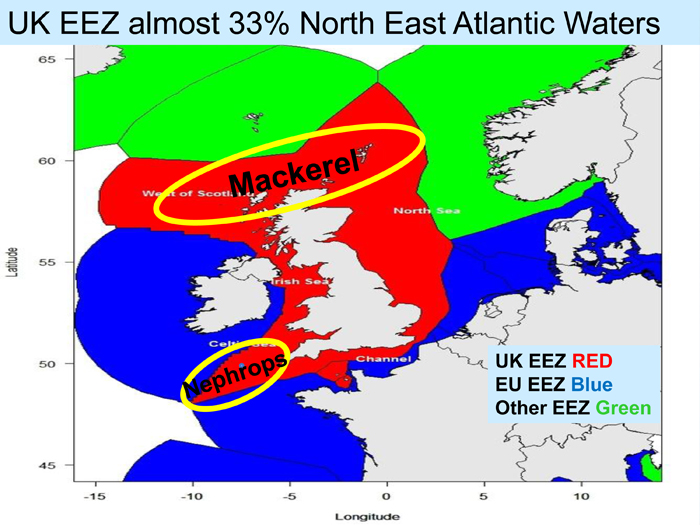
In 2017, the United Kingdom submitted notification of its intention to withdraw from the Union. This means that if the Withdrawal Agreement is not ratified, the EU’s primary and secondary law (including fisheries) will cease to apply to the UK from November 1, 2019, and the UK will become a ‘third country’.
In April 2018, the European Commission (EC) published the ‘Notice to stakeholders – withdrawal of the United Kingdom and EU rules in the field of fisheries and aquaculture’.
On March 28, the European Parliament and the Council adopted Regulation 2019/497 and Regulation 2019/498 which provide for contingency measures on fisheries regarding the withdrawal of the UK from the Union.
In November 2018, the EC presented a ‘Contingency Action Plan’ which sets out the measures it plans to take if no withdrawal agreement enters into force on the withdrawal date.
This latest notice from the EC (July 18), outlines the scenarios of the UK becoming a third-country:
FISHING IN UNION WATERS, THIRD-COUNTRY WATERS AND HIGH SEAS
Q: Will the fishing opportunities Council Regulation (EU) 2019/124 still be applicable in the EU as of the withdrawal date?
A: Yes. The fishing opportunities regulation 2019 will remain applicable to EU Member States in waters other than the UK waters.
Q: Can UK control and enforcement authorities demand that I allow them to inspect my fishing vessel, even if I am not in UK waters? Do my obligations as master during control according to Regulations (EC) No 1224/2009 and (EU) 404/2011 still apply?
A: No. As of the withdrawal date, these control regulations no longer apply to the United Kingdom. UK authorities will not be allowed to carry out inspections in Union waters. Regarding inspections in international waters, the control and enforcement modalities applicable by the relevant fisheries organisations remain valid.
FISHING IN UK WATERS
Q: Will the fishing opportunities regulation 2019 apply to the United Kingdom as of the withdrawal date?
A: No. As of the withdrawal date, Union law – including the fishing opportunities regulation 2019 – no longer applies to the United Kingdom. The UK will have to define the fishing opportunities for UK vessels in domestic legislation.
This also means that Union vessels are allowed to fish in UK waters according to EU law only up until the withdrawal date.
Q: Will the United Kingdom stick to the quotas agreed for 2019?
A: This is a decision for the United Kingdom to make.
In the future, co-operation with the United Kingdom on fisheries will have to be based on alternative legal frameworks and cooperation mechanisms, based on international law and UK national or EU law respectively.
Q: Will EU vessels be able to continue to fish in UK waters?
A: As of the withdrawal date, access to UK waters will only be possible if the United Kingdom explicitly authorises that, and if the flag State authorises the vessel to fish in UK waters.
As set out in Regulation (EU) 2019/498, the EU is ready to provide continued access to its waters until 31 December 2019, if the United Kingdom is going to provide access to its waters for the EU vessels, and respects the terms of the fishing opportunities regulation 2019.
Regulation (EU) 2019/498 sets out the procedure to be followed by vessels in order to obtain authorisations that will be required by the United Kingdom and from their flag State to fish in UK waters.
In practice: the flag Member State will have to provide the information required by the United Kingdom to the Commission, which will send the request for authorisation to the United Kingdom.
Q: What if there is a lag in obtaining such authorisations from the United Kingdom after the withdrawal of the United Kingdom?
A: As long as Union vessels are not authorised to access UK waters, they cannot fish in these waters as of the withdrawal date.
In order to address the potential economic cost of a temporary disruption to access to UK waters for most affected operators, Regulation (EU) 2019/497 gives the possibility to Member States to use support under the European Maritime and Fisheries Fund for temporary cessation of fishing activities for fishermen and operators that have significant dependence on access to UK waters.
Q: Will the EU fleet be allowed to continue to land in UK ports?
A: As of the withdrawal date, access to UK ports and landings in those ports are subject to UK rules.
Should a Union vessel land in a UK port, the products will be subject to sanitary and customs checks by UK authorities, as well as any other fisheries-specific checks established in UK legislation.
Q: Will the UK fleet be allowed to continue to land in EU-27 ports as of the withdrawal date?
A: Yes, subject to the EU rules applicable to third-country vessels, notably on designated ports and prior notice.
Q: Will Union vessels need an International Maritime Organization (IMO) number to fish in UK waters?
A: Should Union vessels be authorised to fish in UK waters, they will have to follow EU rules on the management of the EU fleet active in the waters of a third country and they will have to abide by the applicable UK legislation (incl. relevant rules on IMO numbers).
According to point (b) of the second sub-paragraph of Article 6 of Regulation (EU) 404/2011, the IMO number applies to all Union fishing vessels or fishing vessels controlled by Union operators under a chartering arrangement, of 15 metres length overall and above, operating outside Union waters.
Q: Who communicates to the EU fishermen whether they are authorised or not to continue to fish in UK waters as of the withdrawal date?
A: It is the responsibility of fishermen themselves to know the rules and regulations in place and act in accordance with them. Vessels may continue fishing only on the basis of a valid authorisation.
As set out in Regulation (EU) 2019/498, the EU is ready to provide continued access to its waters until 31 December 2019, if the United Kingdom is going to provide access to its waters for the EU vessels, and respects the terms of the fishing opportunities regulation 2019.
Should there be, on this basis, continued access to UK waters for EU vessels, the Commission will inform the Member States. The flag Member State is then expected to inform its fishermen adequately about applicable rules and procedures.
OTHER ASPECTS RELATING TO FISHING ACTIVITIES
Q: Can a Union vessel continue to transit UK waters as of the withdrawal date?
A: Yes, international law establishes a right of ‘innocent passage’ through the territorial sea and freedom of navigation in the exclusive economic zone.
In absence of an authorisation to fish in these waters, fishing vessels in transit must have gear stowed and secured so that it is not readily available for fishing.
Q: If I fish near the exclusive economic zone border and drift into UK waters when I am gathering my trawl, will that be regarded as fishing in UK waters?
A: Yes. The hauling of active fishing gears is a fishing operation that requires authorisation in accordance with Article 3(2)(g) of Regulation (EU) 2017/2403. It is also defined as a fishing activity by Article 4(1) of Regulation (EC) No 1224/2009.
Therefore, and as it already happens with fishing activities close to neighbouring third countries’ waters, the hauling operation must take place in Union waters unless the Union vessel is authorised to fish within UK waters.
Q: Will UK control and enforcement authorities have access to Union fishing vessel monitoring system (VMS) data and logbook data from FLUX?
A: No. However, as set out in Regulation (EU) 2019/498, the EU is ready to provide continued access to its waters until 31 December 2019, if the United Kingdom is going to provide access to its waters for the EU vessels, and respects the terms of the fishing opportunities regulation 2019. In this case, consideration will be given to the continued exchange of VMS and logbook data via FLUX.
Q: If I spot a UK fishing vessel in Union waters, who should I contact?
A: Any sighting of a third country vessel in Union waters and any evidence of potential illegal fishing activities by fishing vessels in Union waters should be brought to the attention of the control authorities of the relevant coastal Member State.
Q: What kind of reporting will be required upon entry into UK waters as of the withdrawal date?
A: This will depend on the relevant UK requirements.
Q: Will quota swaps with the United Kingdom still be possible as of the withdrawal date?
A: No. However, as set out in Regulation (EU) 2019/498, the EU is ready to provide continued access to its waters until 31 December 2019, if the United Kingdom is going to provide access to its waters for the EU vessels, and respects the terms of the fishing opportunities regulation 2019.
In this case, the possibility of quota swaps with the UK is maintained in 2019 and the Commission will execute the formal quota exchange with the United Kingdom in line with the specific procedure set out in Regulation (EU) 2019/498.
Q: What fisheries conservation and control rules apply to fishing by an EU vessel, before the withdrawal date, in UK waters, if the EU vessel lands in an EU port after the withdrawal of the United Kingdom?
A: The EU rules of the Common Fisheries Policy will apply in this case.
Q: What fisheries conservation and control rules apply to fishing by an EU vessel, before the withdrawal date, in UK waters, if the EU vessel lands in a UK port after the withdrawal of the United Kingdom?
A: As of the withdrawal date, the UK fisheries rules will apply to this case.
CUSTOMS STATUS, FORMALITIES AND CUSTOMS’ DUTIES
Q: What is the customs status of fish caught by an EU vessel in the UK exclusive economic zone when brought to the customs territory of the Union?
A: For the purpose of the customs status of Union goods for products of seafishing the exclusive economic zone is treated in the same way as high sea, therefore, the general rules on the customs status of products of sea-fishing apply, whether the fish was caught there by an EU vessel before or as of the withdrawal date.
Q: What is the customs status of fish caught by an EU vessel as of the withdrawal date in UK territorial waters?
A: Those products of sea-fishing will have the customs status of non-Union goods when brought to the customs territory of the Union. When released for free circulation, they shall be granted relief from import duty according to Article 208(1)(a) of the Union Customs Code
Q: What is the customs status of fish caught by an EU vessel in UK territorial waters before the withdrawal date, but landed in an EU port after the withdrawal of the United Kingdom?
A: In this case, the products of sea-fishing will keep the customs status of Union goods subject to a proof thereof (cf. Article 119(3)(a) of Delegated Regulation (EU) 2015/2446).
Q: Do customs formalities apply to an EU vessel landing in an EU port after the withdrawal of the United Kingdom, after having caught fish in UK territorial waters before the withdrawal date?
A: In general, where an EU vessel catches fish in the territorial waters of a Member State and then lands the fish in a port in the same or in another Member State without leaving the territorial waters (i.e. it is all the time in the customs territory of the Union), no customs formalities will apply, as the fish will be presumed to have the customs status of Union goods (Article 153(1) of the Union Customs Code). However, customs may check whether the vessel has remained in the territorial waters all the time.
Nonetheless, in this specific situation of the UK withdrawal, if an EU vessel lands fish caught in the UK territorial waters before the withdrawal date in an EU port as of that date, customs may ask for a proof of status of that fish according to Article 130 of Delegated Regulation (EU) 2015/2446.
Where an EU vessel catches fish in the territorial waters of a Member State and crosses the high sea before landing the fish in a port in the same or in another Member State, the customs status of Union goods of the fish will have to be proven (Article 119(3)(a) of Delegated Regulation (EU) 2015/2446). Until then it will remain under customs supervision.
Q: What rules apply to fish caught by an EU vessel at high sea, transhipped and transported through the UK and then brought to the EU as of the withdrawal date?
A: Where the fish is landed in the UK before the withdrawal date, but it cannot be excluded that it reaches the EU only as of that date, it is advisable to provide the truck driver with documents proving the customs status of Union goods of the fish.
Where the fish is landed in the UK as of the withdrawal date, the general rules for transhipment and transport through a country or territory which is not part of the customs territory of the Union apply. In the case of the UK, the fish can also be placed under a transit procedure, as the UK will become a Contracting Party to the Convention on a common transit procedure as of the withdrawal date in the no deal situation.
Q: Do customs duties apply to fish caught in UK territorial waters by an EU vessel?
A: According to Article 208(1)(a) of the Union Customs Code, fish taken from the territorial sea of a country or territory outside the customs territory of the Union by vessels solely registered or recorded in a Member State and flying the flag of that State is exempted from duties.
Hence, no duties for fish caught by EU vessels in UK territorial waters will be due, no matter if the vessel lands in an EU port before or after the withdrawal of the United Kingdom.
Evidence has to be provided that the conditions laid down in the Article 208(1) of the Union Customs Code are fulfilled.
Q: Do customs duties apply to fish caught in Union waters by an EU vessel (before or after the withdrawal of the United Kingdom), but landed in an UK port as of the withdrawal date?
A: As of the withdrawal date, UK rules will apply in this case.
Q: What customs tariffs apply in the EU as of the withdrawal date?
A: As of the withdrawal date, the EU’s WTO Tariff Schedule will apply. Regarding the customs tariffs and the calculation of the customs debt, please refer to the ‘Notice to stakeholders – withdrawal of the United Kingdom and EU rules on customs debt and customs tariffs’.
Q: What customs tariffs apply in the United Kingdom as of the withdrawal date?
A: The United Kingdom submitted its proposed tariff schedule in July 2018, which is subject to the usual procedure under the WTO.
On 13 March 2019 the United Kingdom published temporary preferential and non-preferential (MFN) tariffs that will apply for a period up to 12 months in the event of no deal and special arrangements regarding the border on the island of Ireland.
SANITARY CONTROLS (‘OFFICIAL CONTROLS’)
Q: What rules will apply to fish caught in UK waters (before or after the withdrawal of the United Kingdom) but landed in an EU port as of the withdrawal date?
A: The EU rules on official controls of fishery products apply to all fresh fish immediately landed from fishing vessels in EU ports, irrespective of the flag of the vessel or where the fish was caught.
Q: What rules will apply to fish caught in EU waters (before or after the withdrawal of the United Kingdom) but landed in an UK port as of the withdrawal date? As of the withdrawal date, UK rules will apply.
A: As of the withdrawal date, UK rules will apply.

