Fishing industry warns five-year seafood strategy could be a pipe-dream
The Irish sea-fisheries board has launched an ambitious five-year strategy to deliver 1,200 jobs and €1bn in seafood sales by building scale and enhancing competitiveness in the seafood sector.
Capturing Ireland’s Share of The Global Seafood Opportunity is “grounded in Ireland’s ideal position” to take advantage of the projected increase in seafood demand of an additional 42 million tonnes per annum, by 2030.

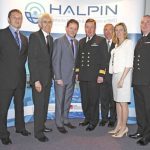
Tom Moran Secretary General of the Dept Agriculture, Food and the Marine; BIM Chairman Kieran Calnan; BIM CEO Jason Whooley and Minister for Agriculture, Food and the Marine, Simon Coveney, TD at the launch of the BIMs 2013-2017 strategy.
With constraints on wild fish catches to meet this demand, “informed market analysis” predicts a 50% increase by 2020 in the current annual production of two million tonnes of farmed salmon,” remarked BIM chairman, Kieran Calnan.
“Sustainable fish farming, when regulated and managed correctly, provides valuable employment, investment and revenue, amounting to a 78% increase in production volume by 2020,” he added.
Value growth
Given the challenge of rebuilding the economy, Simon Coveney, Minster for Agriculture, Food and the Marine welcomes the fact that the agency’s strategy is geared to generating value growth “from an important indigenous industry which will create much needed jobs in our coastal regions.”
Jason Whooley, BIM chief executive said the strategy targeted the sector’s capacity to become a more “heavy-weight education provider and career option for Ireland’s younger generation.
“As a result, BIM will enter into a series of partnerships with third-level education institutions, the training component of which alone will see the agency deliver 8,000 training places by 2017.”
Industry concerns
The agency is targeting an increase of over 45,000 tonnes of additional raw material over the next five years which it says should assist industry reach its projected seafood export figure of €650m.
Commenting to Inshore Ireland, Francis O’Donnell, chief executive of the Irish Fish Producers Organisation said development of the industry was “of paramount importance, but pointed to a “fundamental reality. The 2014 TAC and quotas forecast published by ICES last June makes disturbing reading. We’re looking at cuts in Area VI of whiting (100%); monk (20%); pollack (85%) and saithe 15%.”
He added that in Area VII the picture was more depressing. “In Area B-K, cod and haddock are set to be slashed by 33% and 75% respectively; pollack in VII by 69%; and plaice 59%; cod and whiting by 100% and haddock 52% in area VIIa.
“Our fishing opportunities are set to be cut by half in the whitefish fleet for 2014. We’re facing wipe out. Scaling up to meet the needs in emerging economies is a pipe-dream if fishing opportunities continue to fall at the alarming rate suggested by ICES for 2014,” he warned.
“It’s time people stopped kidding themselves here. We will have to cut our fleet by 50% to stay economically viable, and the only way to achieve that is through a decommissioning scheme. A smaller fleet equals less muscle when securing contracts in wild fish markets,” he said.