
Hot Air: Ireland’s Climate Crisis
The RTE One documentary screened November 9 reveals the role that the oceans play in absorbing atmospheric carbon dioxide but with the consequence of getting warmer, changing chemical composition and are heralding a climate crisis.
As a result, the abundance of marine biodiversity and of ecosystems is under severe pressure where some areas are now barren seabed.
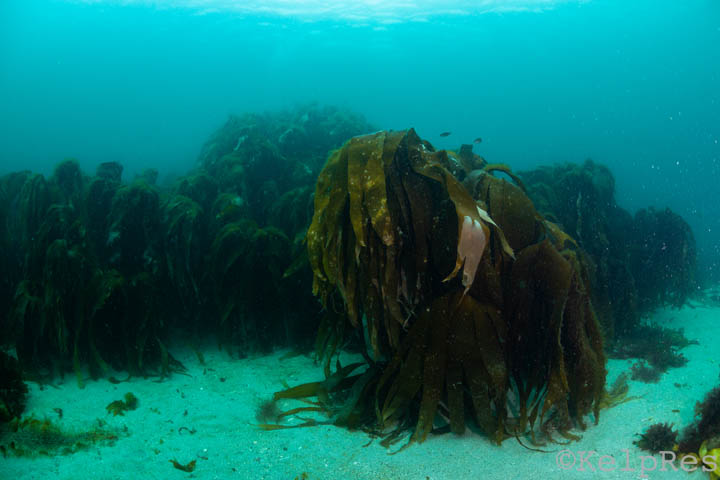
Research funded by the Environmental Protection Agency is studying the function of kelp in Ireland’s nearshore habitats and the importance of kelp forests to the coastal environment by providing protection, structure and food.
The dominant species found on Ireland’s rocky shores is Cuvie, (Laminaria hyperborea). This species is found from the Artic to the Iberian Peninsula but is threatened by ocean warming and heatwaves, and is being replaced by non-natives Golden kelp (Lalminaria ochroleuca) or Wakame (Undaria pinnatifida) that host a depauperate marine system.
Elsewhere, ‘seaweed farming’ to counter climate change is being studied. Kelp and other macroalgae are highly efficient at storing carbon and can ameliorate acidification and deoxgenation.
“Seaweed is finally having its moment in the spotlight,” remarked Halley Frohlich, a marine scientist at the University of California and lead author of a new study that for the first time quantifies global capacity of large-scale seaweed farming to offset terrestrial carbon emissions.

