International trade in fishery products: the regulator’s viewpoint
SFPA
International trade in food is an important part of Ireland’s seafood industry with exports providing the market for approximately half of seafood produced in this country.
In contrast however, the EU is a net importer of seafood and is increasingly dependent on imports of fish and fishery products to meet its needs. In 2009, the EU imported €15.5bn fish and fishery products, accounting for more than 60% of its fish consumption.
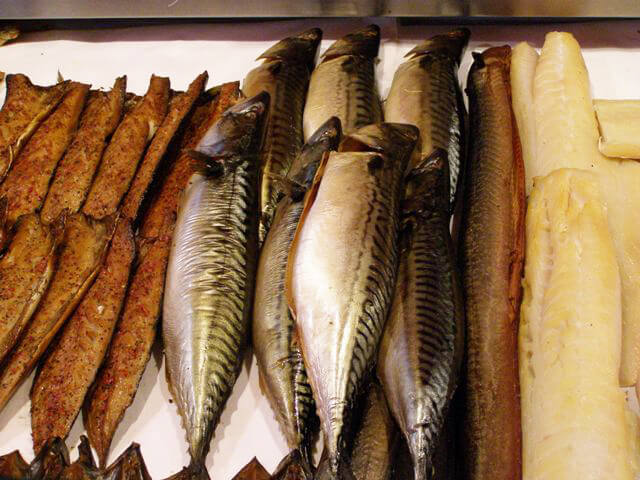
Various species at Bergen fish market
All food of animal origin, including seafood, entering the EU from a ‘third country’ must pass through a designated entry point known as a Border Inspection Post (BIP). Food consignments are subject to checks at a BIP to ensure they adhere to the required food-safety standards and have been legally caught in the case of wild-captured fish.
Imports
Third country imports of fishery products to the EU are increasing; in value terms, Norway, China and Iceland are the main suppliers. The top three species imported are salmon, prawns and pollack, while farmed freshwater species such as Pangasius have notably increased.
Food that has passed BIP checks in any EU Member State can be traded freely within the EU. Seafood enters the EU through Ireland’s BIPs at Dublin Port and Shannon Airport, originating from Philippines, Thailand, the USA, South Africa, Indonesia, China and India, for example.
Exports
At EU level, exports are valued at approximately €2.5bn per annum. Some notable trade patterns include: flour, meal and pellets bound for Norway; salmon to the USA and mackerel to Russia and Nigeria. Excluding landings by non-Irish boats to Irish ports, over half of the seafood produced in Ireland is exported. Approximately 75% of Irish seafood is exported to the EU particularly to France, Spain and the UK, Germany and Italy, while the remainder is exported outside the EU to countries including Russia, Nigeria and Egypt.
Principles of EU regulation
The underlying principle of regulating food imports is one of ensuring compliance with EU standards. The European Commission’s Directorate General for Health & Consumer Protection (DG Sanco) manages the import rules for fishery products and shellfish (bivalve molluscs) and seeks to guarantee that all imports fulfil the same high standards as products from EU Member States, regarding hygiene and consumer safety, and if relevant, also to animal health status.
Import rules are also harmonised to ensure that the same rules apply throughout the EU. For non-EU countries, the Commission is the negotiating partner, and defines import conditions and certification requirements. Countries that wish to export to the EU have to be approved for that trade, and food producers also have to be approved.
The control systems and establishments are subject to audit by the Food and Veterinary Office (FVO) of the EU Commission and spot checks are carried out. These reports are published on the FVO website and sometimes lead directly to the delisting of a country as an exporter to the EU.
Official controls on consignments of food at BIPs place specific emphasis on documentary checks to verify that the food has been produced in an approved establishment in a country approved to export to the EU.
Verification checks
The primary documents here are the Common Veterinary Entry Document and Health Certificate which have to accompany consignments. BIP official controls also include physical checks of the imported products to verify acceptability; whilst sampling and analysis are required to monitor compliance with requirements around prevalence or concentration of chemical or microbiological hazards.
The SFPA is responsible for implementing EU seafood safety legislation in Ireland, thereby ensuring that all seafood marketed in Ireland, including imports, meets the necessary standards of food safety and hygiene. SFPA maintains the register of importers of fish and fishery products, and SFPA officers have a role in supporting the work of Ireland’s BIP staff to ensure that imported seafood meets the necessary standards.
Importers of seafood or their agents must register with the SFPA. Information on this is available on SFPA’s website: www.sfpa.ie. Importers and agents are required to familiarise themselves with the various obligations necessary to allow this trade, including the requirement to give at least 24-hours notice of the intent to import fish and/or fishery products of animal origin to the SFPA and the BIP at the port or airport of entry.
IUU fishing
The checks described above are common to all foods of animal origin entering the EU, and in the case of wild-caught fish entering from Third Countries, an additional set of controls is also required to prevent entry of ‘illegal, unreported, unregulated’(IUU) fish.
IUU fishing is an increasing global problem accounting for an estimated 20% of all marine catches world-wide, valued at roughly €10bn per annum. Of the approximate €15bn worth of seafood imported into the EU, IUU fish accounts for roughly €1bn.
The EU has driven a global effort to tackle this issue, principally by implementing an entire regulatory framework that came into effect in 2010.
The IUU regulation and its implementing rules endeavour to ensure that none of the illegally caught fish products end up on the Community market. To that end, the regulation puts in place a ‘catch certification’ scheme designed to ensure that fishery products are accompanied by verification of the appropriate authorisation of the catching vessel.
Third Countries exporting fishery products to the EU have agreed to implement the catch certification scheme. All fishery products that are not exempt from the scheme must have a catch certificate validated by the fishery competent authority in that exporting country.
The SFPA is the competent authority in Ireland for export purposes and the verification for import purposes. For consignments of imports of fishery products subject to the IUU protocol, the SFPA carries out official controls of the catch certificate, verifying the accuracy of it and the associated paperwork.
Official control of seafood exports
Ireland is a net exporter of seafood and much of the SFPA’s work provides a necessary underlying infrastructure to support seafood exports.
Approval and ongoing seafood safety official controls create the basis for Ireland’s seafood to be traded anywhere within the EU. International trade in food is based upon a reciprocal trust in control systems and the SFPA’s work significantly supports market access for Irish seafood.
For exports to Third Countries, the SFPA has secured access to Russia, USA, Japan and China. The documents required for food to enter the EU are the same documents required to ensure Irish seafood can enter Third Countries.
SFPA officers devote a lot of their time to issuing Health and Catch Certificates for Irish seafood exports. In 2010, the SFPA issued certificates to support the export of over 24,000 tonnes to more than 30 Third Countries.
Overall, a comprehensive control system is in place to support and control seafood trade from and to Ireland. The SFPA’s work helps to ensure that imported seafood meets the necessary standards and supports the market access enjoyed by Irish seafood in international markets.

