
Ireland defends action to protect marine habitats
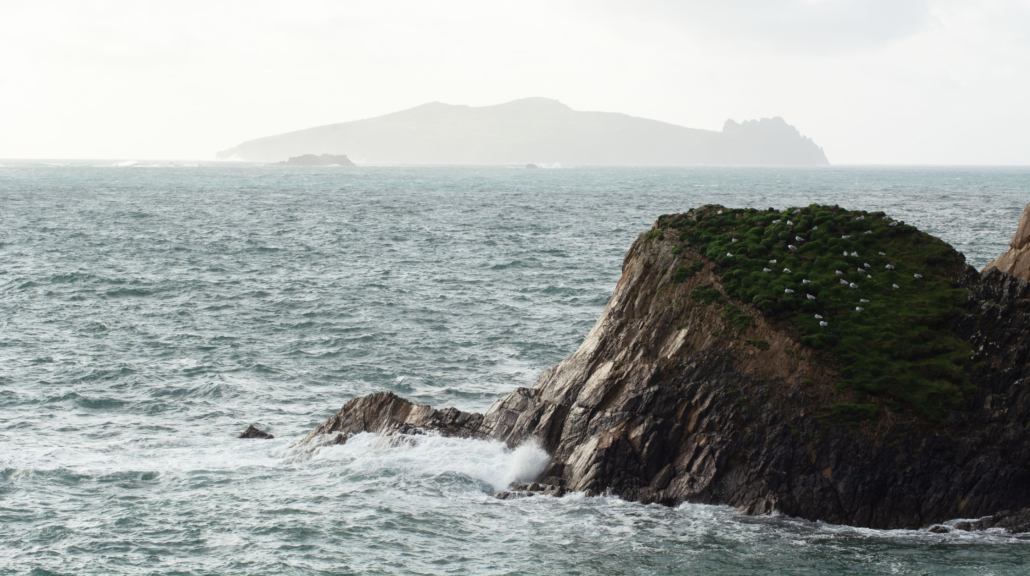
Sleeping Giant, Ventry, Co Kerry. Expanded MPA network required to protect threatened marine species, habitats and ecosystems
The Department of Housing, Local Government and Heritage has told Ocean Focus it will ‘vigorously defend the huge progress made’ in marine habitats, in its obligations under the Habitats Directive and the Birds Directive.
In May 2026, the European Commission sent a letter of formal notice to Ireland for failing to fulfil its obligations under the Habitats Directive and the Birds Directive, giving Ireland two months within which to respond and to address the ‘shortcomings’ raised.
In the absence of a satisfactory response, the Commission can issue a reasoned opinion.
Protecting seabirds
Under the Habitats Directive, member states must propose Sites of Community Importance (SCIs) to protect threatened habitat types and species (including in the marine space). Under the Birds Directive, member states must classify Special Protection Areas (SPAs) to protect certain bird species, including seabird species.
For sites in the marine environment, the Commission agreed that member states would have until 2012 to put this marine habitats network in place. In 2015, the Commission opened a series of investigations to assess progress:
‘While Ireland has undertaken significant monitoring of its marine waters, the Irish authorities have not yet formally proposed new marine SCIs and have not yet classified marine SPAs in coastal and offshore areas,’ it stated.
‘Failure to propose these sites long after the deadline has passed obstructs the rapid roll-out of renewable energy projects as it creates legal uncertainty for authorities and developers,’ the Commission has warned.
Public notices
Responding, DHLGH said Ireland publicly notified two marine candidate Special Areas of Conservation: Southern Canyons and Porcupine Shelf in 2024.
‘Further public notifications of two very large candidate Special Protection Areas for the protection of seabirds were issued in 2023 (North West Irish Sea) and 2024 (Seas off Wexford).’
While these four marine sites have legal protection since the date of their public notification and the European Commission were advised of their protective status in 2024, they are not currently reflected in European Commission statistics,’ the department added.
Incomplete network
The Irish Whale & Dolphin Group says the Commission’s action confirms what it and many others have said for years:
“Ireland’s marine protected area network remains incomplete and further evidence-based designations are urgently required. Without the EU Habitats and Birds Directives – which oblige Ireland legally to implement their conservations ambitions – there would be very little nature conservation in Ireland,” remarked Dr Simon Berrows.
The EU has sought IWDG input into its review of Ireland’s implementation of MPAs for harbour porpoise and bottlenose dolphin:
“We supported their opinion that Ireland has been insufficient and has failed to provide an evidence-based justification of the recently designated SACs for these species.
“A transparent and evidence-based approach to identifying, designating and managing MPAs for cetaceans is essential if they are to be effective and encourage stakeholder buy-in.”
The groups says the State’s continued lack of engagement to properly implement and manage SACs for dolphins and porpoises “is regrettable”.
Without legislation and implementation, it believes Ireland faces more “paper parks” with no measurable benefit to cetaceans or coastal communities.
“Healthy cetacean populations mean healthy seas”, reflecting the health of the wider marine environment.