Ireland’s ocean economy ‘on course’ to achieve 2020 target
The NUI Galway’s Socio-Economic Marine Research Unit (SEMRU) latest update on the performance of Ireland’s ocean economypresents a ‘complete and comparable’ profile across thirteen marine-related industries in Ireland.
The update shows that Ireland’s ocean economy has a turnover of €6.2bn with a direct economic contribution, as measured by GVA, of €2.2bn or 1.1% of GDP. Taking into account indirect GVA generated from ocean-related activity, total GVA is €4.2bn representing 2% of GDP.
Dr Stephen Hynes, co-author of the report and Director of SEMRU, has advised government that the latest figures indicate Ireland’s ocean economy is performing on average better than the general economy, but warns that the difference is not as great as the previous reporting period:
“Estimates suggest that the ocean economy grew by 11% between 2016 and 2018, which is just marginally above the growth of 10% in Ireland’s GDP for the same period,” he told Inshore Ireland.
Growth rates
Year-on-year, the highest growth rates in 2018 were in the international cruise industry, oil and gas exploration and production, marine commerce, and marine biotechnology and bio-products.
A proposed Bill to limit future oil and gas exploration, recently voted through the Dáil to the legislative stage, “could have serious consequences for the future growth potential of the sector,” he added.
The substantial growth in the value of international cruise was driven by a surge in cruise liner and passenger numbers visiting Irish ports in 2018.
Plans by Dublin port to substantially reduce the number of berths available to cruise ships could also have implications for future growth in the industry, “not just in Dublin but across all of cruise destinations in Ireland,” he warns.
Not all industries in Ireland’s ocean economy saw growth in 2018 however. There was a fall in the value of aquaculture output and seafood processing. Year-on-year growth was also flat in the emerging industries of marine renewables and advanced marine technology.
“The sluggish performance of these industries aside, they still probably have the greatest growth potential considering the increasing energy and food demands that accompany an increasing global population,” he added.
Constraints to increasing renewable sources of energy onshore and decreasing terrestrial areas to provide food means that provision from offshore sources has to increase, he warns.
“As these industries develop, we can also expect higher demands on ports and shipping to service operations offshore and increased use of marine technology.”
Marine ecosystem services
This year’s report also presented the value of some marine ecosystem services. Factoring their value into marine decision-making “is vital in order to ensure the healthy marine environment that forms the bedrock of a thriving ocean economy.”
“As Senator John Kerry eloquently put it at the Summit, “There’s no blue economy if we don’t protect our oceans. Done right, it doesn’t hurt jobs, it is jobs,” Dr Hynes said.
Dr Peter Heffernan, CEO of the Marine Institute who funded the report noted that Ireland was one of a few countries that has access to regularly updated marine economic data, showing trends now spanning over 10 years.
“These independent data and trends published by NUI Galway underpin the vision set out by government in ‘Harnessing Our Ocean Wealth’ whereby Ireland’s vast marine territory is harnessed in a sustainable manner and is recognised as an integral element of Ireland’s overall economy, generating benefits for Irish citizens and supported by integrated policy, planning and regulation,” he said.
Commenting on the report, Prof Alan Ahearne, Director of the Whitaker Institute, NUI Galway, said that with the uncertainty generated by Brexit, Ireland’s ocean wealth has never been more important to Ireland’s economic prosperity.
“The figures published by SEMRU clearly demonstrate the importance and impact of targeted investment and research in developing a sustainable ocean economy here in Ireland”.
Ireland’s Established Marine Industries: comprising traditional marine sectors (shipping, seafood, tourism in marine and coastal areas, offshore energy, marine manufacturing & engineering and marine retail services) – have an estimated turnover of €5.8bn and provide employment of 32,048 FTEs.
These segments of the ocean economy represent 93% of the total turnover and 94% of total employment. The top three sectors in terms of value and employment continue to be shipping, marine tourism and seafood.
Ireland’s Emerging Marine Industries: comprising marine renewables, marine biotechnology, advanced marine products and services, and maritime commerce – have an estimated turnover of €459m, and provide employment to 2,084 FTEs, representing 7% of the turnover and 6% of employment in Ireland’s ocean economy.
Of the emerging industries, marine commerce and the marine biotechnology and bio-products industries experienced the largest increases in turnover and GVA in the 2016-2018 period.
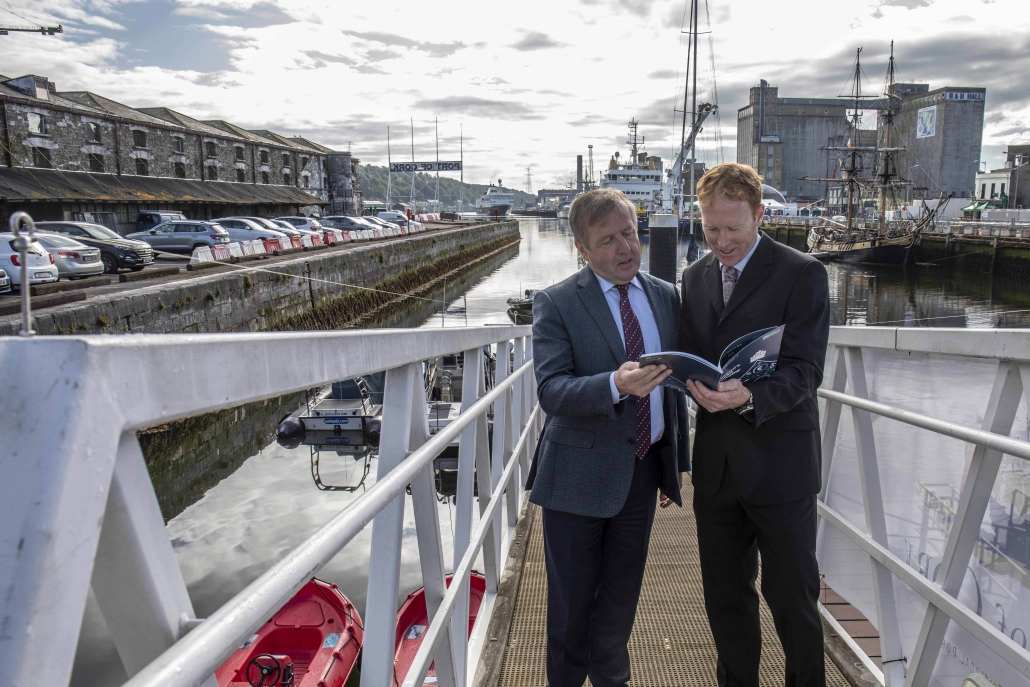
The latest figures have been announced by Minister for Agriculture, Food & the Marine, Michael Creed, TD at the Annual Ocean Wealth Summit in Cork. The 2019 Summit will see national and global leaders discuss the health of our oceans. This includes senior Government and UN representatives from island states sharing experiences on oceans’ health and climate change.
