Maritime Safety Strategy 2015-2019
Launching the new Maritime Safety Strategy, Minister for Transport, Tourism and Sport, Paschal Donohoe, said all stakeholders “must work together” to ensure that potentially avoidable fatalities are eleminated.
The five-year programme Make Time for Maritime Safety‘ was developed following consultation with key stakeholders and the public, and includes an analysis of the factors contributing to maritime fatalities in Ireland.
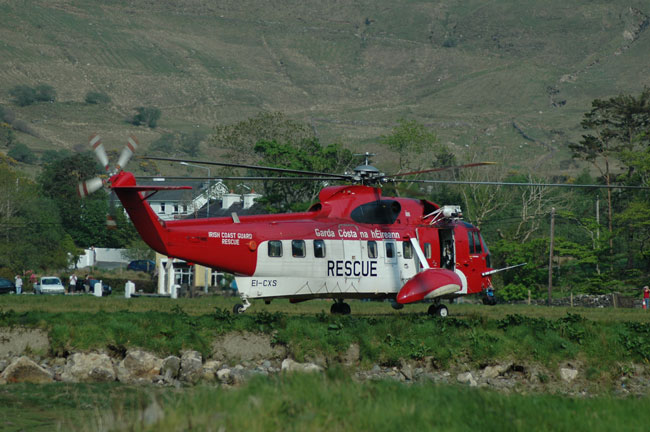
Irish Coast Guard safety demonstration at Leenane, Co Galway, 2011. Photo Gillian Mills
“My Department’s maritime safety remit covers safety on recreational craft, including surfboards, fishing vessels and cargo ships, and it is these areas that are covered by the Strategy.
Although the average annual number of marine incident-related fatalities, of 11 is low, he said, “lives continue to be lost on the water, despite regulation, inspections and training. Perhaps not surprisingly, most incidents happen in the fishing and recreational sectors. What is striking, however, is the fact that 99% of maritime fatalities are male, with an average age of 44, and that [these] fatalities are potentially avoidable.”
He added there was broad agreement that to reduce fatalities, the focus needed to be on changing culture and personal behaviour, rather than on more regulation.
While this Strategy primarily identifies actions that the Department, through the Irish Maritime Administration (IMA) will take, the important roles of individuals and sectoral organisations are also highlighted.
“Notwithstanding the efforts of my Department in terms of preventative action, enforcement and emergency response, these efforts cannot on their own improve maritime safety. It is up to each individual who takes to the water to take personal responsibility for their actions and to understand that failure to operate safely puts not just their own life at risk, but the lives of others on board – and potentially the lives of emergency and rescue personnel,” Minister Donohoe stressed.
The genesis of this Strategy was the emergence of recurring causal factors in marine casualty investigation reports and recognition of the extent to which maritime fatalities and incidents could be avoided.
Among the top 10 factors identified are:
• The need for an enhanced maritime safety culture
• Unsuitable or inadequately maintained safety equipment on board, or lack thereof
• Lack of crew training
• Failure to plan journeys safely, including failure to take sea/weather conditions into account
• Non-wearing of personal flotation device (lifejacket/buoyancy aid)
• Vessel unseaworthy, unstable and/or overloaded
The 33 actions outlined in the report are grouped under five over-arching strategic objectives:Information and Communication; Search and Rescue Operations; Standards, Enforcement; Data and Evaluation, and are centred on promoting personal responsibility for maritime safety; improving search and rescue and implementing preventative measures, including a robust inspection and regulatory framework, and an enhanced enforcement regime.
“This strategy sets out in a very straightforward way, what [everyone] can do to ensure safety when taking to the water. This includes proper planning; operating on a safety first basis; always telling somebody where you are going and when you expect to be back; wearing suitable clothing and always wearing lifejackets and buoyance aids.
“I urge everyone involved in the sector to pay close heed to the Strategy’s contents so that together we can reduce, and eventually eliminate, needless fatalities at sea,” Minister Donohoe stressed.