
Port blockades and widespread chaos warning in no-deal Brexit
Failure to achieve an orderly Brexit will precipitate “chaos and conflict at sea” with port blockades across Europe being a very real prospect, Seán O’Donoghue of the Killybegs Fishermen’s Organisation has warned.
Should Irish and other EU fleets be denied access to UK waters after midnight on October 31 next, there will be flash points in the surrounding waters, potentially reminiscent of the cod wars of the 1940s, ’50s and ’60s, he believes.
Scallop dispute
“Some years ago, trucks were indiscriminately burnt out in France during an agricultural dispute which had nothing to do with us. Mark my words, French fishermen won’t stand on ceremony. Port blockades, which would deny access to all fish, fishery products as well as other products irrespective of origin, and the resultant disorder, chaos and most likely violence, will not be pretty.
“We got a taste of what can happen at sea last year with the scallop dispute between the UK and France in the Channel.”
The situation would be uncontrollable with almost 3,000 kilometres of ‘water border’ to be policed and the “potentially devastating consequences” for fleets that would have to be tied up.
“This really cannot be what people want,” he argues.
Fisheries link
The KFO chief executive says however it is not too late to avoid a ‘no-deal’ Brexit, and emphasises the importance of maintaining the link between fisheries negotiations and the Future Trade Agreement, along with sound science-based fisheries management. Even in a no-deal scenario, “we have to avoid this mayhem at sea and ashore”.
The EU has offered to apply the ‘status quo’ in the short-term, provided it is reciprocated by the UK.
“This would go a long way to avoid this immediate chaos,” he adds.
He describes the Brexit process as a “harrowing and grim journey” for fishermen.
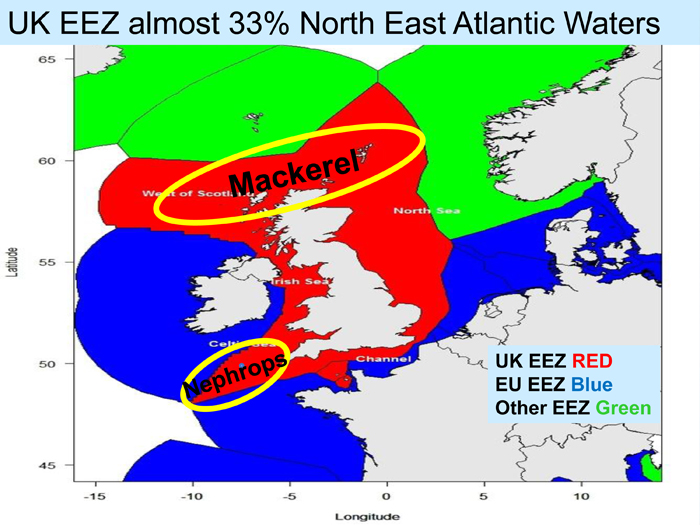
“Like a teacher without a classroom or a taxi-driver without a vehicle, our fishermen are staring into the abyss of being unable to access the waters [that] provide on average more than 30% of their catch.”
Ireland’s reliance on UK waters is roughly 60% for mackerel and 40% for nephrops (prawns); these species are two of the main sources of income for the industry.
“It’s very hard to get one’s head around the fact that waters to which we have enjoyed access could soon be out of bounds with no physical wall nor barrier in place.
“In the midst of all the chaos and uncertainty we have been working diligently to keep fisheries on the agenda of the negotiators.
“I must acknowledge the key role played by the Irish government, particularly Taoiseach Leo Varadkar, Tánaiste Simon Coveney and Minister Michael Creed, in tandem with EU chief negotiator Michel Barnier and their representative officials, in listening and acting on the concerns of the fishing industry.
“Whereas fish are mobile and know no borders nor bear any nationality, our trawlers don’t have this luxury and must obey boundaries and exclusion zones.
The industry “must move might and mane” to avoid a ‘no-deal Brexit and the ramifications that this could have for the sector, he warns.

