
Restructuring of lobster fishery to avert stock collapse
Proposed changes in managing access to the Irish lobster fishery if accepted by the industry will see the Irish coast divided into eight units. All authorised vessels under or equal to 12m in length will be licensed to fish for lobster; however vessels over 12m will be only be authorised on the basis of established track record.
Managing Access to the Irish Lobster Fishery, which was prepared by BIM in consultation with the Lobster Species Advisory Group, follows on from an analysis of lobster stocks that revealed over-exploitation in many areas around the coast.
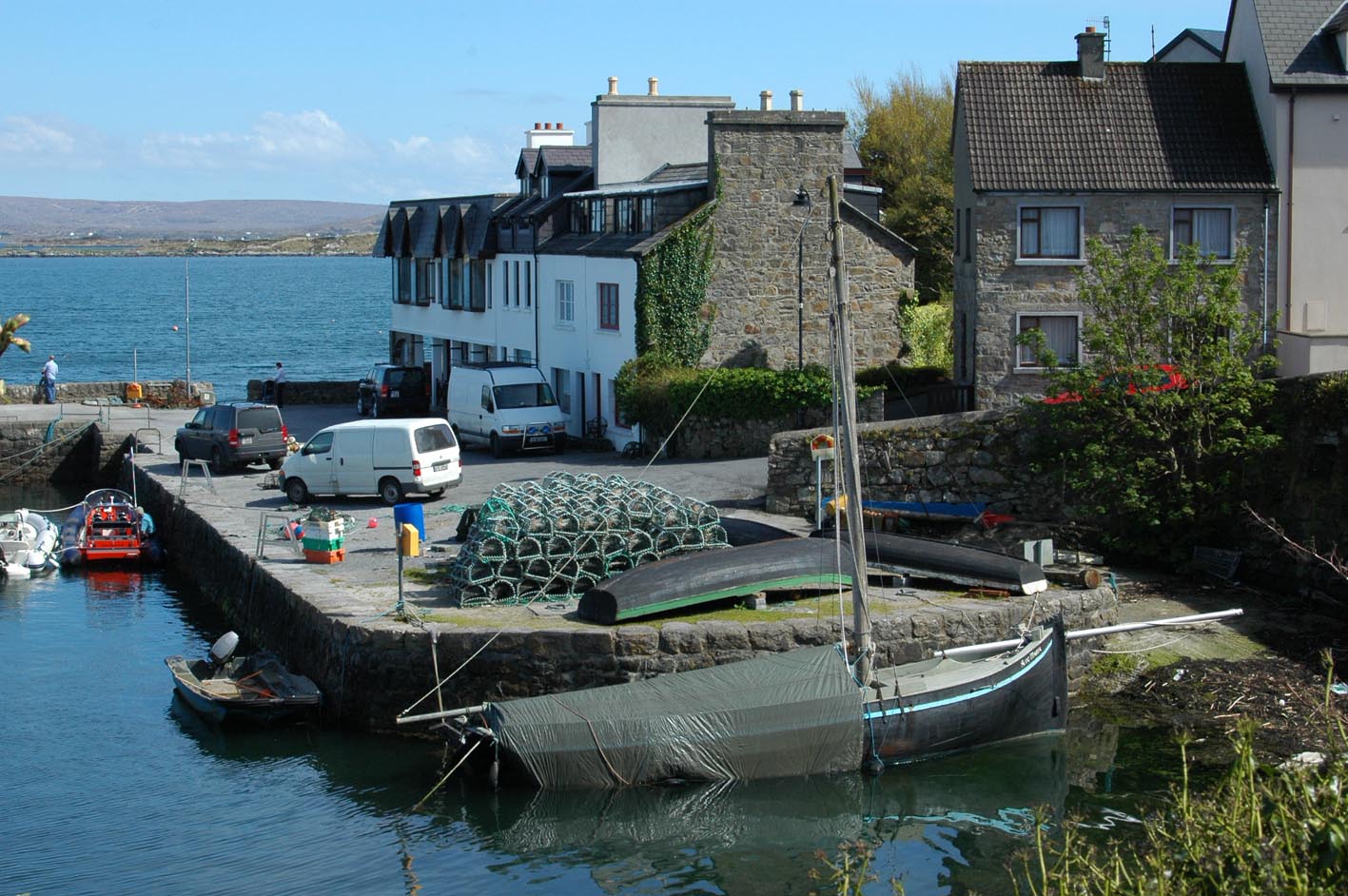
Pic: Lobster fishermen in the Roundstone area will primarily fish out of Management Unit 5b. Photo G Mills
Total capacity of vessels authorised to fish lobster will be stabilised once initial authorisations are issued, and further increases will be conditional upon improvement in catches and as agreed by industry.
A holder of an authorisation will be entitled to fish in two adjacent sub areas of choice. For example, if a fisherman operates close to the boundary between Areas 5 and 6, he could seek authorisation to fish Areas 5b and 6a. If however he operates closer to the middle of Area 5, he might seek authorisation to cover Areas 5a and 5b. (see map).
Authorisations will be valid for two years and will only be renewed on submission of appropriate evidence (logbook) of fishing activity during that period.
Speaking at the launch, Jason Whooley, CEO of BIM said that changes needed to protect lobster stocks were broadly accepted:
“The report provides a blueprint for a successful management regime, “that will clearly define boundaries in order to manage stocks and in so doing, provide for a more secure Irish lobster industry.
Summary of proposed changes:
• Access will be managed regionally
• Authorisation required for all vessels fishing lobster
• Authorisation can only be transferred with capacity within a management unit
• New entrants to the fishery will be managed on the basis of priority rules to be agreed with industry
• Authorised vessels must record and report activity
• The fishery at national and regional level will operate under a management plan that will document the objectives and strategies over a five-year term. Biological, economic and environmental data will be used to monitor how the plan is performing and to make adjustments as necessary.
• Within the eight areas, local industry is expected to implement the management plan drawn up by the LSAG