
UK cannot have its ‘fish cake’ and eat it
As the future EU-UK relationship post Brexit nears the end game, a bilateral fisheries agreement remains unresolved.
The European Fisheries Alliance, a coalition of fishing fleets representing over 18,000 fishermen and 3,500 vessels in the Member States, says the UK should ‘no longer benefit from additional quota’ granted after joining the Union in 1973.
When seeking to establish a new base line for sharing, the UK allocation should be adjusted downwards by 26% ‘to once again reflect historic catches but this time without the benefit of any adjustment for third-country losses established in the original keys and still in use today’.
The current allocation key of fishing quotas, known as ‘relative stability’ along with reciprocal access to each other’s fishing grounds, has been the foundation of the Common Fisheries Policy. Both elements of stability ‘have significantly contributed’ to improving fish stock sustainability in community waters, argues the EUFA.
Background
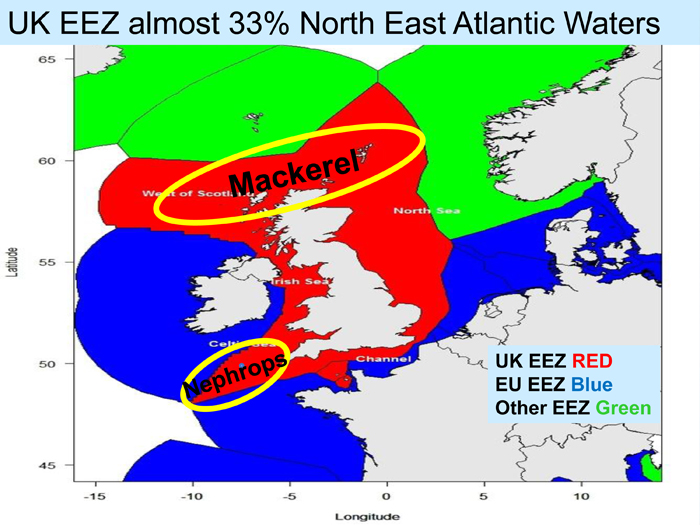
When the UK joined the European Union it was compensated for potential losses of fishing opportunities in third-country waters due to the extension of Exclusive Economic Zones (EEZ) in 1976 to 200 miles. This amounted to 26% increase (volume) on their basic allocation of quota shares for seven principal fish stocks.
‘This increase was and still is additional to its historical share under the relative stability. These additional quota shares granted to the UK were taken out of the quota shares of other Member States at the time.’
EUFA believes that the current fisheries management system is a ‘delicate balance’ between the sustainable management of fish stocks and the economic prosperity of fishing fleets:
‘This balance must be maintained in the interest of all involved. As a matter of principle, the UK should not have at the same time the status of an independent Coastal State and the benefits of EU Membership.
EUFA chairman Gerard van Balsfoort said European fishermen seek a “balanced, mutually beneficial” long-term Brexit agreement:
“An allocation of fishing quota that reflects the historical fishing patterns, such as relative stability, is key to achieve this. The new normal needs to be calculated the right way. We are asking for nothing more, and nothing less.”
Seán O’Donoghue, chief executive of the Killybegs Fishermen’s Organisation, said the UK cannot expect to retain the privileges of membership while blocking its “erstwhile European colleagues” from its waters and doubling its catch:
“When you leave a club, you relinquish the privileges that were afforded you when you were a member. It’s as simple as that, it’s crystal clear.”

