‘Slow Food’ celebrities break link to farmed salmon boycott
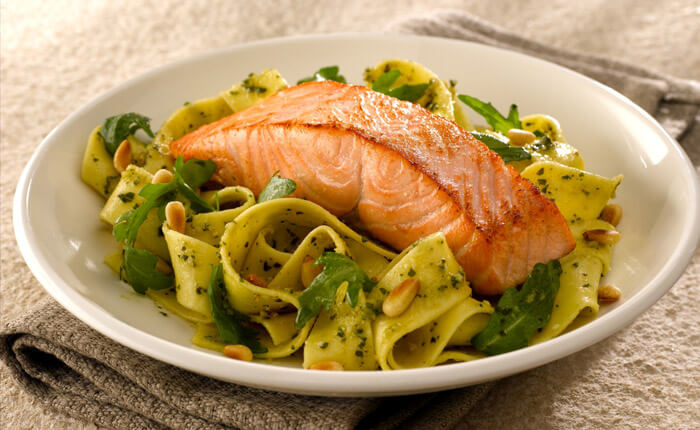
Two prominent members of the Slow Food Ireland movement have distanced themselves from a call by environmental watchdog, Friends of the Irish Environment, to boycott farmed salmon, saying they had not been contacted in advance of the campaign.
Food journalist and publisher Sally McKenna of the Bridgstone Guide and Darina Allen, founder of the Ballymaloe Cookery School, told Inshore Ireland they did not support the pre-Christmas call to boycott smoked Irish farmed salmon.
Freedom of Information mechanism fails to unearth publicly-funded report
Why is the official report of a major EU-backed scientific project involving Irish State Agencies not readily available here, asks the December issue of Inshore Ireland.
The report is believed to include detailed information on the impact of sea lice on wild salmon and sea trout. The SUMBAWS Project 2002 - 2005 (SUstainable Management of interactions Between Aquaculture and Wild Salmonid fish) studied the impact of sea lice on wild populations of salmon and sea trout, and details the results of experiments by fisheries biologists in Ireland, Scotland, Netherlands and Norway.The Economic and Social Research Institute (ESRI) also contributed to the project.
Why is a publicly-funded document not available in Ireland?
Our lead story outlines the frustration experienced by a representative of an aquaculture producer organisation trying to obtain from an official source in Ireland a copy of the final complete report of the SUMBAWS Project (SUstainable Management of interactions Between Aquaculture and Wild Salmonid fish).
SUMBAWS – by all accounts is a significant report and had a working budget of just over €2.3 million and cost EU tax payers more than €1.5 million.
Publicly-funded report unavailable from official sources in Ireland
Inshore Ireland’s December lead story asks why the official report of a major EU-backed scientific project, believed to include detailed analysis of the impact of sea lice on wild salmon and sea trout, is not readily available in Ireland.
Why is this publicly-funded report not available in Ireland?
The SUMBAWS Project (SUstainable Management of interactions Between Aquaculture and Wild Salmonid fish) studied the impact of sea lice on wild populations of salmon and sea trout, and details the results of experiments by fisheries biologists in Ireland, Scotland, Netherlands and Norway.
 https://oceanfocus.ie/wp-content/uploads/2014/08/salmon-cages.jpg
320
650
Gillian Mills and Gery Flynn
https://oceanfocus.ie/wp-content/uploads/2020/05/Ocean_Focus_marine_Publication.png
Gillian Mills and Gery Flynn2014-12-10 10:23:582020-11-10 10:47:07Elusive SUMBAWS report central to salmon farming investigation
https://oceanfocus.ie/wp-content/uploads/2014/08/salmon-cages.jpg
320
650
Gillian Mills and Gery Flynn
https://oceanfocus.ie/wp-content/uploads/2020/05/Ocean_Focus_marine_Publication.png
Gillian Mills and Gery Flynn2014-12-10 10:23:582020-11-10 10:47:07Elusive SUMBAWS report central to salmon farming investigation
Traditional seaweed harvesters fear introdution of compulsory licensing
Údarás na Gaeltachta’s decison in March to sell its shares in seaweed processor Arramara Teoranta to Acadian Seaplants Limited of Canada has led to disquiet among traditional harvesters who fear that compulsory licensing is about to be introduced.
The December issue of Inshore Ireland (13/12) includes an exclusive interview with Jean-Paul Deveau, President of Acadian Seaplants Limited.
Abundant supplies of seaweed on Ireland's west coast
Responding to Inshore Ireland's question on licensing, Mr Deveau said that Arramara Teo never held a licence to harvest seaweed and has always relied on harvesters to supply the factory. He said that would continue to be the case under the new owners.

Seaweed – Ireland’s newest farming activity
Seaweed farming offers Ireland the opportunity to become a producer of one of the EU's fastest growing food categories that by 2020 could boost Irish seafood sales by an additional €10 million per year.
This was a key message delivered to close on 200 delegates attending the BIM hosted conference Farmed Irish Seaweed: An Ocean Wonder Food? as the Agency's first report on Irish seaweed farming was unveiled.
About one quarter of EU seaweed suipply is produced in France and Spain
Findings from The European Market for Sea Vegetables - a study specially commissioned for the conference - show Ireland targeting 2,000 metric tonnes (harvest weight) per annum of seaweed, farmed for human consumption.
Ireland has no case to answer in sea lice complaint says EU Commission
A five-year Pilot Investigation by the European Commission into the potential impact of sea lice on wild salmon stocks in Ireland has concluded with the finding that the Irish State has no case to answer.
The investigation was launched in 2009 following complaints by Salmon Watch Ireland and Friends of the Irish Environment (FIE). The case was initially closed in 2012 but was reopened later that year after FIE provided the Commission with additional information, including a report from Inland Fisheries Ireland.
EU Commission report into the potential impact of sea lice on wild salmon stocks in Ireland states that Ireland has no case to answer
Since its introduction in April 2008, the EU Pilot has been a relatively quick and effective mechanism designed to provide answers to questions arising in the application of EU laws – particularly those raised by citizens or businesses.

Marine Harvest Ireland responds to issues raised by Galway Bay Against Salmon Cages
In August Galway Bay Against Salmon Cages (GBASC) issued a press release that raised serious issues regarding Marine Harvest Ireland’s (MHI) occasional abstraction of water from Loughaunore Connemara (Sept issue of Inshore Ireland carries the press release in full - available from 6/09).
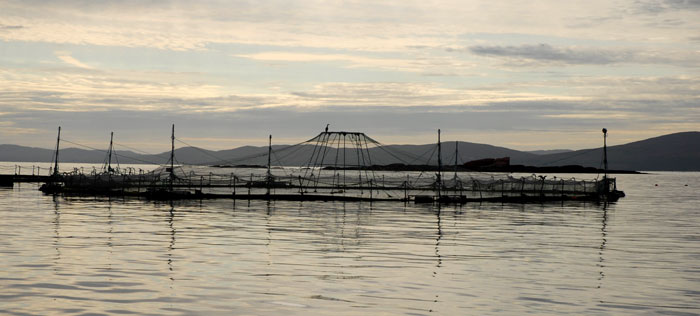
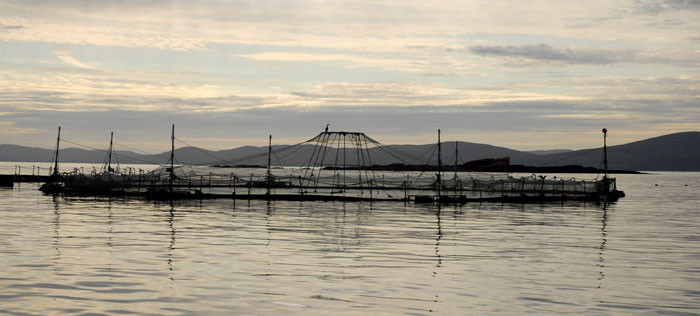
Salmon cages at Ard Mhóir
We put some of GBASC’s points to Marine Harvest Ireland and they responded as follows: