
Guidance to compliance for the Irish inshore fleet
The Sea-Fisheries Protection Authority’s Guide to Compliance for the Irish Inshore Fleet is a concise guide that summarises the principal requirements applying to Irish fishing vessels under 15 metres operating in Irish inshore waters. The guide is available in both Irish and English language versions from SFPA port offices, which are located in the Main Fishery Harbour Centres. Typically the inshore fleet comprises fishing vessels under 15m, representing approximately 87 per cent of the entire Irish fleet in terms of vessel numbers.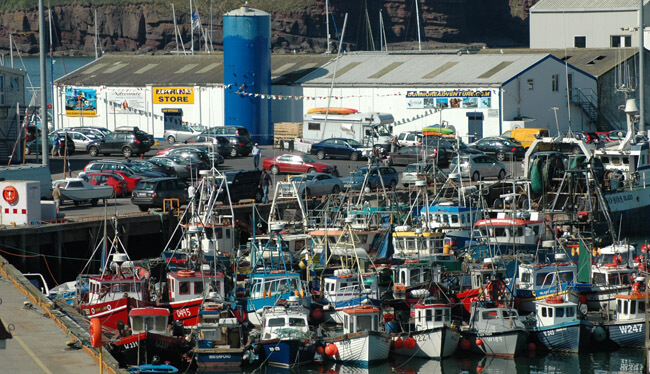
The inshore fleet at Dunmore East. Photo Gillian Mills/Inshore Ireland
The guide was developed through ongoing cooperation between the SFPA and the Irish South and East Fish Producers Organisation, the Kilmore Quay Harbour Users Group in conjunction with the Ministerial appointed SFPA Consultative Committee and other industry stakeholders.
The aim of the project is to provide inshore fishermen with a clear and concise guide to the various technical regulations that apply to inshore fishing activities in a user-friendly format. Providing good information to stakeholders is a key element of the SFPA’s compliance strategy and this inshore guide underpins the work undertaken by the agency and the fishing industry in building a culture of compliance.
While the guide does not represent a detailed legal interpretation of the legislation, it does however consolidate the main requirements that apply to Irish vessels fishing in Irish inshore waters, such as:
- quota restrictions
- boat markings
- gear requirements
- Authorisations
- sales notes
- transport documents
- marine protected areas fishing restrictions
- hail requirements
- effort recording
- effort reporting
- minimum sizes
- seafood safety.
This comprehensive guide also helps fishermen with the paperwork that goes with fishing, such as completing the logbook and registering fish after landing.
Partnership approach
The SFPA would like to gratefully acknowledge the support and input by the fishing industry representatives and the SFPA’s Consultative Committee in drafting the guide. This partnership approach benefits the fishing industry and the SFPA, and supports the day-to-day efforts of fishermen to protect their livelihoods by complying with conservation legislation protecting fish stocks for long-term sustainable exploitation.
The European Union has recently completed work finalising the detailed implementing rules (Commission Implementing Regulation (EC) No 404/2011) giving effect to the Fisheries Control Regulation (Council Regulation (EC) No 1224/2009).
These regulations provide a new detailed legislative framework for compliance with the Common Fisheries Policy. The regulations consolidate many existing regulations, some of which have been in place since 1983. This new framework regulation brings in new rules to validate fish catches including the traceability of all fishery products from catch to the consumer’s plate.
Under 10m vessels
The Regulation recognises the particular difficulties for smaller vessels less than 10m in keeping logbooks. Whilst there is no preclusion from keeping a logbook, the landings of smaller vessels may continue to be managed by means of sales notes or through the introduction of a sampling plan by the SFPA.
All catches of more than 30kg that are not for personal consumption but are placed on the market must be first sold to a registered buyer. At the time of first sale, fishery products shall be placed into ‘Lots’ which would normally be completed by the buyer. For small-scale fisheries, buyers will be able to combine up to 30kg of a single species supplied by a number of vessels, which comes from the same management area into a single ‘Lot.’
Other new requirements include marking static gear such as nets, pots and lines and in particular to mark with durable labels. The SFPA will be producing a series of Fishery Information Notices (FINs) on the SFPA website (www.sfpa.ie) shortly to cover aspects of these new regulations.
Copies of the Guide to Compliance for the Irish Inshore Fleet and further information on the legislation is available on the SFPA website (www.sfpa.ie) and from SFPA port offices located in the Main Fishery Harbour Centres.
x