Mandatory landing of fish stocks from 2016
A Regional Agreement to reduce unwanted fish discards has been brokered by Ireland for the North West Waters (NWW) Group of Member States involving Belgium, France, the Netherlands, Spain, the UK and Ireland.

The practice of ‘slipping at sea’. The net is never taken from the water – it is opened to release the fish, the majority of which are already dead. These fish are not counted for and the extent of the damage is not known
The unanimous agreement on a Discard Plan covers all waters around Ireland, as well as the Channel, and comes into effect on January 1, 2016.
The ban applies to the prawn (nephrops) fishery in all waters; the whiting fishery in the Celtic Sea and the haddock fishery in the Irish Sea and in the North West area. Member States have also committed to rolling out the landing obligation to other fisheries by 2019 when it will apply to all stocks.
Impact assessment
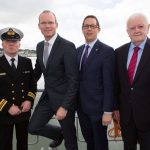
Announcing the details, marine minister Simon Coveney has tasked BIM and the Marine Institute to explore the potential impact of the landing obligation on commercial fishing activity and has made €450,000 available to undertake the task over the summer months.
Phased introduction of a landing obligation for species subject to catch limits is a key element of the new Common Fisheries Policy (CFP), aimed at reducing catches of juvenile fish and eliminating discards.
“All catches of all fisheries will have to be landed from 2019 onwards, and this agreement outlines the first steps on that journey and will allow all our fleets the necessary time to gradually adjust and prepare for the full implementation,” remarked Minister Coveney.
“The journey is not going to be easy but I am satisfied that the agreement, reached in consultation with all key stakeholders, is a good start. Our national Discards Implementation Group, under Dr Noel Cawley, will now have a clear blueprint to help prepare our industry for the changes to come.”
Reaction
While recognising difficulties in finding regional agreement, the Irish Fish Producers Organisation does not support the joint recommendations ‘in their current form’.
In a statement, IFPO chief executive Francis O’Donnell said the plan lacks the necessary flexibility to allow businesses adapt and adjust to what is a ‘ground shift’ in European fisheries management.
In its current form, the plan uses historical track record to determine what rules will apply to a vessel on January 1, 2016.
‘You may be targeting nephrops but are caught under a different set of rules as a result of previous catch composition percentages in the years (2013-2014). The Irish industry, including the four POs were in favour of the elective model whereby the master [of a vessel] would opt to target a certain species or group of species, in advance of the fishing trip and would declare this by way of ERS. We believe that from a control and risk analysis perspective that this made sense.’
This was not adopted, the IFPO contends, ‘and critically, little or no socio-economic evaluation has been undertaken to understand how the land obligation and the current joint recommendations will impact on the key stakeholders which are fishermen.’
‘This has been a political decision from the first day that we never supported but unfortunately now have to find some way to work with it.’
O’Donnell believes that high survivability exemptions are not understood for many species. ‘The promised quota uplift to match catches (landings and discards) – the carrot as such – is now not a certainty.’