
Plastic debris located at bottom of deep submarine canyon
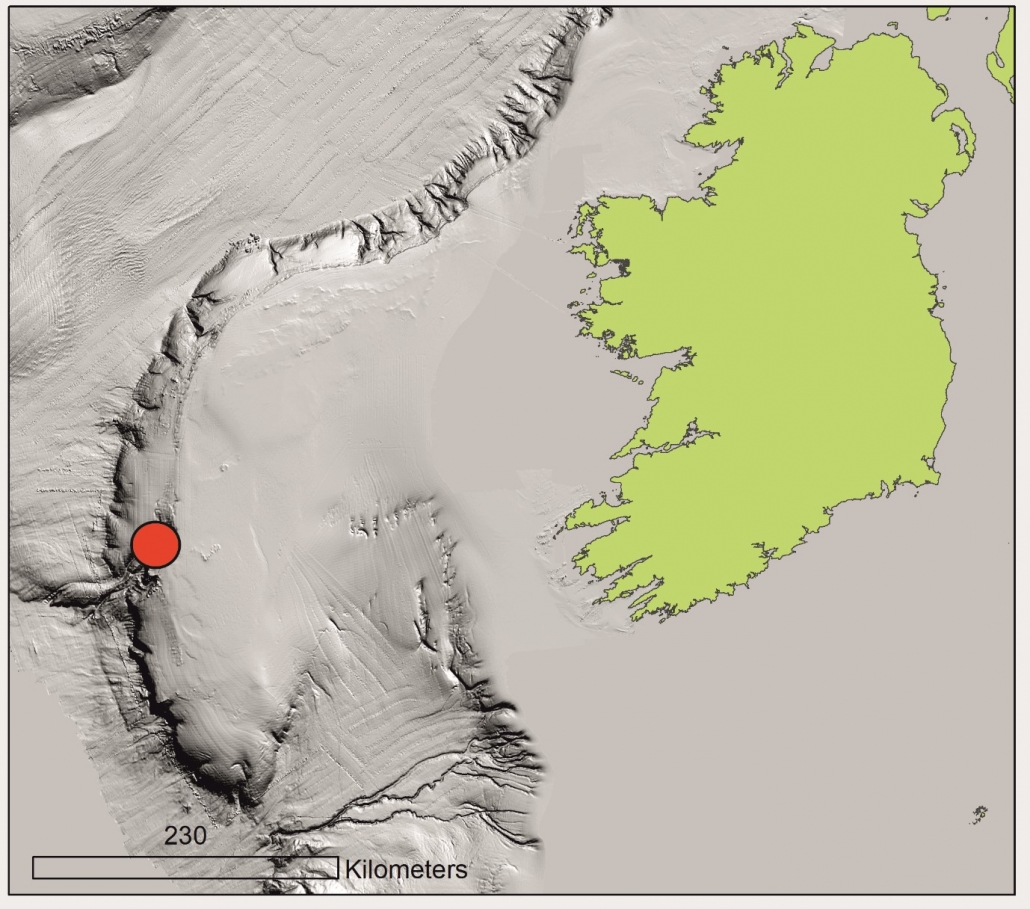
An expedition led by University College Cork has discovered plastic particles at a depth of 2,125m – equivalent to ten Eiffel Towers stacked – during a study of cold-water coral habits 320km due west of Dingle, Co Kerry.
UCC’s Marine Geology Research group was operating in the Porcupine Bank Canyon on board the Marine Institute’s RV Celtic Explorer when the discovery was made.
Led by Dr Aaron Lim, the group recovered eight novel monitoring stations or ‘landers’ deployed between 2,500m and 700m by the institute’s ROV, Holland 1.
Changing oceans
These monitoring stations record speed, temperatures and current direction around these habitats, as well as trapping samples of food, sediments and microplastics being deposited around the corals, to understand conditions and how the corals are coping with changing oceans.
The data gathered will give an insight into the processes affecting these habitats, the food they are eating and the level of microplastics impacting on them.
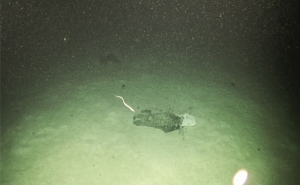
“It’s always sad to see plastic rubbish in these otherwise pristine habitats,” remarked UCC Professor, Andy Wheeler, who has pioneered research on cold-water coral mounds offshore Ireland for over 20 years.
“It’s quite incredible that our plastic waste can get this far out and so deep in the oceans. I don’t think people think about this when they dump their rubbish,” he added.
Microplastic food
The team is also trying to establish if microplastics are being fed to the corals from above.
“We’ve just got the samples; let’s hope we’re wrong.”
The Porcupine Bank Canyon is teeming with a range of cold-water habitats, explains Dr Lim:
“The environment is much more dynamic that we thought, with two of the monitoring stations knocked over by the currents; food supply for the coral is variable but the corals are doing ok.”
Some of the habitats have existed for millions of years and have grown so large they resemble hills made of coral, called coral mounds, he added.
Cold-water coral reefs are located in water depths of 600-1,000 metres along Ireland’s continental margin.
“Not only is this expedition vital for understanding these habitats and our impact on them, it also acts as a baseline to start monitoring how our deep-water habitats are changing,” Dr Lim explained.
Paddy O’Driscoll, ROV Holland 1 superintendent, said Ireland now has the technological capacity to undertake surveys in very deep water “and to answer questions not just for Ireland but also vital to understand our planet’s health.”
The survey was funded under the Marine Research Programme 2014-2020 by the Irish government and the research is funded by Science Foundation Ireland, Geological Survey Ireland and University College Cork.
Microplastics have also been discovered on Ireland’s continental shelf.

