
Economic crisis ahead for inshore fishermen
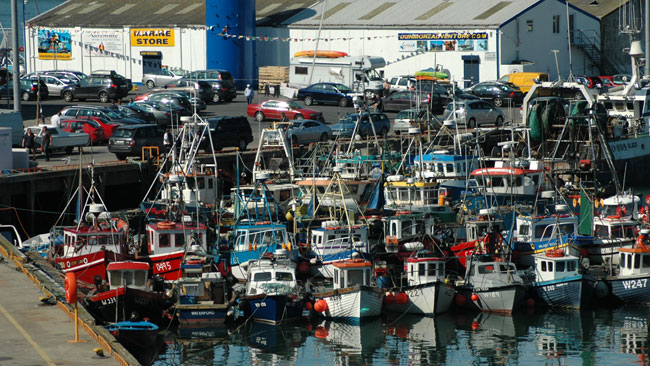
An ‘unprecedented’ economic crisis is unfolding for Ireland’s inshore fishing sector which represents over 80% of the fishing fleet. The sector comprises boats measuring 12 metres and under that are predominantly active within six nautical miles of shore and support up to 3,000 jobs.
Without financial support “in some shape or form” there is palpable fear for their future viability.
Market collapse
Alex Crowley, secretary of the National Inshore Fishermen’s Association, told Ocean Focus that Covid-19 was yet another extremely challenging situation, along with ongoing problems in the brown crab sector and a collapse in the price of razors affecting east coast fishermen.
First-sale prices for brown crab ― a species on which there is high dependency ― dropped significantly in the latter half of 2019.
Falling catch rates and landings, problems with health certificates on the Chinese market, and widespread investment following a good 2015-2016 season are now hitting home and profits has all but disappeared.
On the west coast, St Patrick’s Day would typically herald the start of the lobster fishery. This year however, wholesalers have told fishermen there is no sale for lobster and it could be the end of May at least before markets recover.
First-sale prices dropped from around €30/kg to €20/kg since before Christmas and now most operators face a scenario where they have no outlets for their lobster.
A similar situation is also unfolding in the domestic razor clam and whelk fisheries. First-sale price/kg (15/01/2020) of razor clam ranged from €17/XL to €13/L, €8.50/M and €3.50/S. Some vessels have ceased fishing and job losses are reported.
On average, whelk prices have dropped 20-30% and layoffs are also happening in this sector.
Financial fallout
“Fishermen don’t have the financial capacity to deal with extended periods of low or no profitability. Some have reported loss and damage to fishing gear, and many are foregoing non-essential maintenance and are not buying replacement equipment.
“This will lead to a decrease in overall operational efficiency and will reduce resilience to deal with the current difficulties in the long-term,” he warns.
By the very nature of their business, fishermen are “acutely exposed” to the crises that are unfolding:
“Inshore fishermen are very weather dependent, producing high value, low volume high-end products, many of which are not just perishable but are alive. This presents unique challenges.
“It means fishermen must available of fishing opportunities when the weather allows, when the fish is available and within range, and to sell it to the consumer within a very short timeframe.”
Crowley says these circumstances contrast with the offshore catching sector which through quota management, added-value opportunities and processing, extends the shelf life of their catch:
“They have greater capacity to manage the temporal nature of fishing opportunities and to avoid temporary drops in market demand, and other challenges.
“This is why inshore fishermen really need a cash injection, now.”
If this doesn’t happen, Crowley foresees serious liquidity problems:
“As a sector I think we’re more exposed. I know the tourism and hospitality sectors are also feeling the pinch, but on the back of some very good years. You can’t say the same for inshore fisheries.”
Call to government
The organisations have outlined their concerns to the Department of Agriculture, Food and the Marine. While membership of the NIFA/NIFO and NIFF is effectively a ‘random snapshot’, Crowley says the issues are likely to be indicative of the entire inshore sector:
“There’s very poor resilience to deal with a crisis like this. Add to this a spell of very bad weather and fishermen are feeling this now; overdrafts are already stretched to their limits.”
Crowley acknowledges that since submitting their document in early March, the government has announced an emergency six-week payment package:
“We’re advising all our affected members to apply for that. I’m waiting to see if they are actually eligible but I see nothing at all to say they’re not.”
Harbour dues, repayments on borrowings and insurance are significant financial burdens. The sector is also low on new recruits as the entry level is seen as a barrier for young people:
“If you take the basic entry level, you’re still talking about a capital outlay of around €100,000 – and that would be for a very small boat.”
Following a meeting between Minister Pascal Donohoe and the banks, Crowley is hopeful that a situation where loan repayments can be deferred will ease the burden on the limited working capital available to members.
And while specific loans for working capital also seem to be in the pipeline, he warns that increasing a debt burden to borrow their way out of the crisis, is not a viable solution for members:
“Regarding insurance, if a boat isn’t fishing or is tied up in a safe haven, brokers appear to be open to giving fishermen a break on their premiums. Fishermen need to talk to their brokers, their underwriters etc to see if they can get help.”
Tailored supports
Crowley believes that ‘tailored business supports’ are required to build resilience and to future-proof the sector against economic shocks:
“The whitefish fleet has also been forced to tie up because most whitefish is exported to Europe and supply chains are breaking down. Consumer confidence is declining and fresh fish prices have collapsed.
“We’re at a time when we need national food security more than ever before. We’ve been told by buyers and wholesalers not to bother fishing because they can’t sell our catch.”
But there’s still a nation to feed, he argues.
“That’s why I’m talking about a broad marketing strategy – especially for the inshore sector. Too many eggs were placed in one basket – the Asian market basket – and prior to that it was the European basket.”
Domestic opportunities
Crowley sees a situation where fishermen could have greater control over their markets:
“They wouldn’t be ‘price takers’ but would supply several markets, including the domestic market. If we can’t get our product into the Spanish or French markets, let’s take control of where our fish can go – the home market – we’ve a country to feed.
“There will be a huge amount of work to be done on this, as we emerge from this crisis. Most species caught by inshore operators are seen as alien to Irish consumers. This is not an immediate solution, but is something that needs to be looked at in the long-term.”

