Former fishing industry representative recalls the complexities of the sector
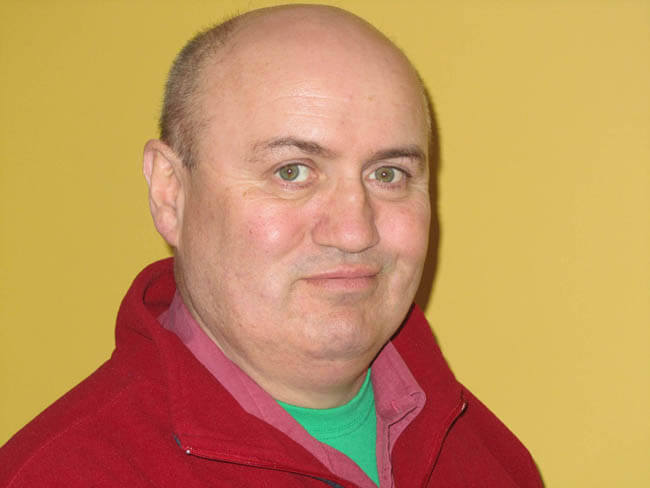
Locán Ó Cinnéide’s career path has never vered far from the the heart of Ireland’s seafishing industry: whether as a commercial fisherman; a fishing industry development executive; or independent business man.
By now this Kerryman’s face and voice are recognised in every port in Ireland – as one of the fishing industry’s most senior representatives. He is highly respected at home and abroad.
After first completing an economics degree at Trinity in College Dublin in 1989 the Ballydavid native began fishing his own boat. This was when he first became involved in the complicated politics of sea fishing, and where his formidible negotiating and representational skills were honed.
By 1999 he was working as a local Inshore Fisheries Development Officer for BIM , and by 2002 elevated to chief executive of the Irish Fish Producers Organisation. When the four main Irish fishing organisations merged as the Federation of Irish Fishermen, Ó Cinnéide was its innaugural chairman.
It was in this key position that he was to become the voice of more than 90% of the ‘offshore fleet’.
In that role he will be remembered for his passionately articulate and unflinching demands of government to value and develop the industry. Often critical of politicians for their “weak and ineffectual policies” regarding marine development, he regularly highlights the “lack of joined-up-thinking” for the current malaise affecting the sector.
“It is in crisis because of Byzantime and complex regulations,” he believes.
Now however, after eight eventful and sometimes stormy years at the IFPO, Ó Cinnéide is changing course and has set his sights “on new challenges”.
Shortly before clearing his desk he spoke to Inshore Ireland about is time at the heart of Irish fishing.
Looking back on your time with the IFPO how do you read the current status of Ireland’s fishing industry?
It is really very diverse, and it’s hard to say exactly where it is as a whole. We have multi-million euro operations at one end of it and part-time pot-fishermen working in small punts at the other.
The pelagic side of the business is looking very good with increasing herring stocks in the Celtic Sea and the northwest and record prices in the past year for mackerel herring and horse mackerel.
There are uncertainties however. The 2011 prices are unlikely to hold, and the situation where Iceland and the Faroe Islands have been taking 300,000 tonnes of mackerel annually in the past few years poses a serious medium-term threat to the North East Atlantic stocks.
Internally, we have the continuous battle for access to pelagic fisheries; however these are all problems arising from good resource situations.
Regarding whitefish the situation is far more problematic. The complexities of regulation; the high cost of fuel dampening profitability; the volumes of third-country imports depressing prices; difficulty finding crew for vessels in many parts of the whitefish industry – are just some of the problems the industry faces.
Yes, there are real and positive signs of improvement in stocks such as cod and haddock, as well as a healthy hake stock. But we do not have a level playing field in shared EU waters – and certainly not in EU markets on imports.
The Nephrops sector – Ireland’s second largest earner worth €50m in landed value –which has improved in price and in demand terms from a disastrous period throughout 2010 is stymied by high fuel costs. And despite an abundance of quota it is threatened by splitting management into small areas, as witnessed by what has happened on the Porcupine Bank.
Inshore fisheries – apart from a healthy shrimp fishery last year – are a total mess due to the complete failure to introduce proper management. This has lead to a developing situation where in the absence of sensible management and fishing data, the EU Natura conservation criteria are in danger of becoming a de-facto substitute. This will not help long-term rational exploitation, in my view
Regarding regulation and policy – have you grounds for optimism?
Inconsistency of regulation at EU and local levels in framing and implementing policy and management remains. And while we have justifiable fears of CFP reform and the EU, many of our problems have their roots here in Ireland. In my view we are too slow to change and take charge of our circumstances.
The industry is its usual fragmented, argumentative self. The majority of fishermen are struggling to varying degrees of success, and a small but vocal minority are as grasping and greedy as ever. At the same time, Minister Coveney, BIM, as well as the Harvest 2020 Strategy which I was involved in, collectively paint a bright future.
It certainly is better today than in the dark days of 2006 under Minister Noel Dempsey. That was when the State used the media and succeeded somewhat despite our best efforts, to blacken the fishing industry and its communities in support of some very ill-judged legislation.
What are your reflections as former head of the IFPO?
It was a really amazing job. For the range of subjects and diversity of situations, I don’t think you could think of a more challenging position. You could be discussing long-term EU policy and meeting a Commissioner; dealing with the minutiae of how to divvy out the ‘loaves and fishes’ in quota management, to dealing with some desperately difficult personal situations – all in a day! I’ve seen the best in people – when they will go more than the extra mile. But I’ve also seen some appalling selfishness, jealously and greed.
Outline some of the difficulties you faced on a daily basis
I always found it hard to get used to the pretty constant criticism I heard – or heard about. It’s a small industry and everyone knows everyone else involved in it, by and large.
I know I have a reputation for having a sharp and fairly profane tongue, which is something I’m not terribly proud of – and I am not very thick skinned, despite what people think! In the end, there were no punches thrown – which is probably a miracle in itself. But harsh words were often spoken – by all sides.
Nevertheless I was very lucky with the IFPO Boards and the Chairmen I worked to, led in turn by Brendan O’Rourke from Brandon and latterly Frank Doherty from Kincasslagh. They were both wonderful to me; gave me very good advice and watched my back. I am very grateful to them and the various Board members too over the years.
Trying to keep track of the roguery, some of which was hilarious was a full-time job in itself! The humour and sense of mischief; the wind-ups, the slandering – a finely developed art- which is common throughout the industry is an essential antidote to its more dark and difficult aspects. I suppose you could say I was steeped in it all having been around the business for a good few years and also being from a coastal community myself.
How do you think you coped with these challenges?
Being the head of a PO in Ireland is difficult. You have responsibility to its members; however your actions are scrutinised daily by people who don’t pay your wages. You have to reconcile completely opposing viewpoints within and without, as well as navigating all the agencies, departments, ministers, the press and all that.
It will be for others to judge whether I did that well or not. I certainly was poor at the administrative side of the business but I probably made up for that in some other areas. I certainly made a lot of mistakes, and no doubt others will point them out! All I will claim is that I tried to do my job fairly, not following geographic or sectional factions within the IFPO. I think that principle was clear from the beginning.
What does the industry require to offset the challenges it faces?
The structures in Ireland require a radical overhaul. People must be encouraged to get involved and not allow the vocal minorities always to have their way, as seems to be a growing trend.
A vital industry like fisheries, which faces major challenges from environmental lobbies, EU regulations, complex Irish regulations, challenges to manage stocks and retaining Ireland’s communities, needs to merge a culture of real enterprise with a new culture of co-operation. That will determine its success or failure in the years ahead.