 https://oceanfocus.ie/wp-content/uploads/2020/05/Ocean_Focus_marine_Publication.png
0
0
Guest Writer
https://oceanfocus.ie/wp-content/uploads/2020/05/Ocean_Focus_marine_Publication.png
Guest Writer2012-09-03 14:07:512019-02-14 09:19:39Highly-charged debate on domestic water charges and metering
https://oceanfocus.ie/wp-content/uploads/2020/05/Ocean_Focus_marine_Publication.png
0
0
Guest Writer
https://oceanfocus.ie/wp-content/uploads/2020/05/Ocean_Focus_marine_Publication.png
Guest Writer2012-09-03 14:07:512019-02-14 09:19:39Highly-charged debate on domestic water charges and metering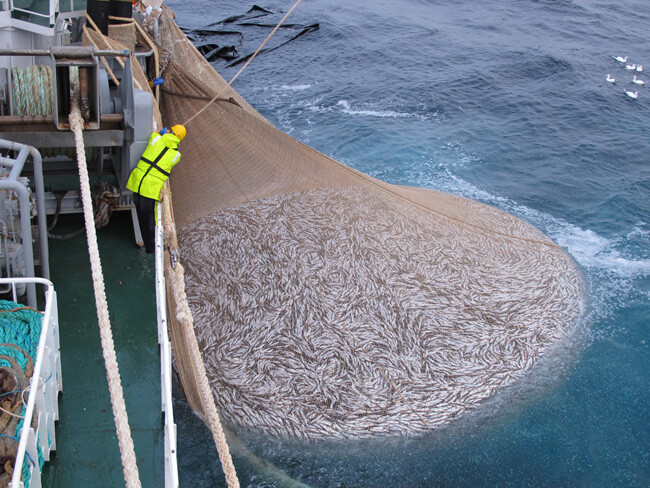
Fisheries Council agrees all-species landing, starting with pelagics in January 2014
An agreement by the Council of Fisheries Ministers to a landing obligation of all fishing vessels for all quota species beginning with pelagic fisheries from January 1, 2014, has been described as a “flawed approach” by the Federation of Irish Fishermen (FIF) as a method to address the complexissue of fish discards.
A fine haul of herring alongside mfv Vigilant. The June Council of Fisheries Ministers agreed a landing obligation of all vessels for all quota species, beginning with pelagics in January 2014. Photo John Cunningham
“This approach is impractical and unworkable,” remarked their chief executive who added there was agreement throughout the European-wide fishing industry that discarding needed to be reduced “to the lowest level possible”.
Looking to the United States for innovation and cluster development initiatives
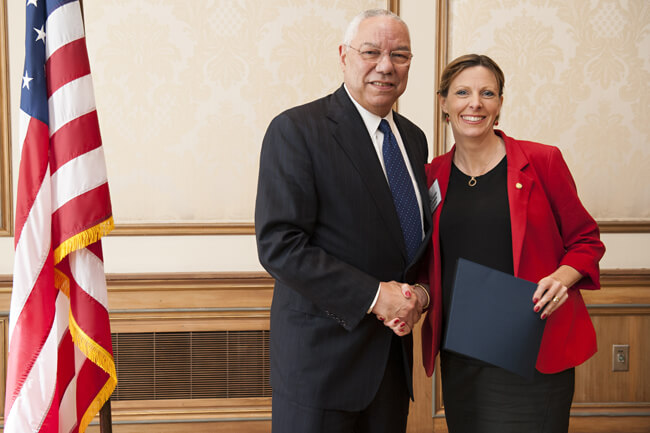
Dr Valerie Cummins has returned to Ireland following a seven-week programme in the U.S. to investigate ways to improve the maritime economy of Ireland. Dr Cummins was sponsored by the prestigious U.S. Eisenhower Fellowships programme, chaired by General Colin L. Powell, U.S.A (Ret).
Dr Valerie Cummins with General Colin Powell
An expert in maritime development, coastal zone management, and sustainability science, Dr Cummins directs IMERC – the Irish Maritime and Energy Resource Cluster. IMERC unites Ireland's largest maritime institutions – University College Cork; the Cork Institute of Technology, (including the National Maritime College of Ireland) and the Irish Naval Service – to establish Ireland as a leader in marine energy and maritime industries.

Summer of marine science & technology
Lisa Fitzpatrick, Marine Institute
All eyes will be on Irish marine science this summer during two prominent events. The first will be held in Galway at the Ocean Wealth Showcase in the Volvo Ocean Race Global Village, June 30-July 8. The second takes place the following week at the European Science Open Forum (ESOF) 2012, Convention Centre Dublin from July 11-15.
Dr Peter Heffernan; David Fahy, ESOF; Minister Simon Coveney; Ciara Backwell, An Taoiseach Enda Kenny; Jim Fennell, and Lydie Dieval
The Ocean Wealth Showcase opens with fun activities for the family scheduled for the weekend. The focus then shifts to marine information and communications technology (ICT) and how we can get the most from our marine resource through marine technology.
https://oceanfocus.ie/wp-content/uploads/2020/05/Ocean_Focus_marine_Publication.png
0
0
Guest Writer
https://oceanfocus.ie/wp-content/uploads/2020/05/Ocean_Focus_marine_Publication.png
Guest Writer2012-09-03 12:46:032019-02-14 09:18:54Simplistic model ensures Norwegians retain greatest percentage of ‘oil’ spoils
https://oceanfocus.ie/wp-content/uploads/2020/05/Ocean_Focus_marine_Publication.png
0
0
Guest Writer
https://oceanfocus.ie/wp-content/uploads/2020/05/Ocean_Focus_marine_Publication.png
Guest Writer2012-09-03 11:30:002019-02-14 09:18:45NutraMara: Food Research & Development targeting societal challenges in Europe
Why is fracking under the spotlight when it has been practiced here for over thirty years?
Now that exploration licences have been issued to several companies to explore for shale gas throughout Ireland, the debate is hotting up on the process that could be used to extract it - hydraulic fracturing, or fracking.
Graphic courtesy of Tamboran
To find out more about this controversial hydrocarbon extraction process Inshore Ireland spoke to Gareth Jones of Conodate, a geological consultancy that specialies in biostratography, petrographic analysis, karst interpretation and geothermal energy. Mr Jones is also professionally accredited by the Institute of Geologists of Ireland and by the European Federation of Geologists.
 https://oceanfocus.ie/wp-content/uploads/2012/09/8.3coastline_model.JPG
380
650
Guest Writer
https://oceanfocus.ie/wp-content/uploads/2020/05/Ocean_Focus_marine_Publication.png
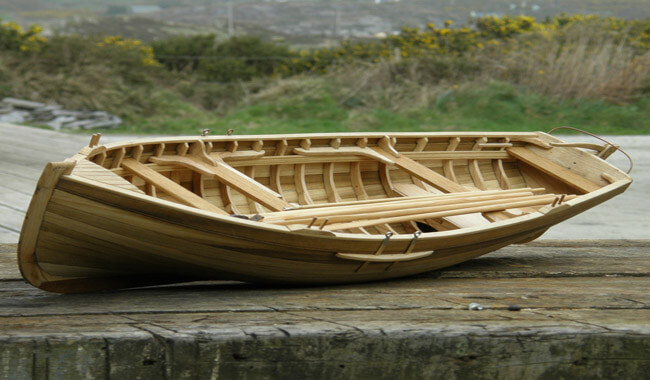
Guest Writer2012-09-03 09:58:312019-02-14 09:18:35A model world of painstaking precision
https://oceanfocus.ie/wp-content/uploads/2012/09/8.3coastline_model.JPG
380
650
Guest Writer
https://oceanfocus.ie/wp-content/uploads/2020/05/Ocean_Focus_marine_Publication.png
Guest Writer2012-09-03 09:58:312019-02-14 09:18:35A model world of painstaking precisionConnecting the marine industry with educational institutes
A comprehensive STCW10 education and training package aimed at seafarers in diverse sectors of the marine industry and operating worldwide is now available via an e-learning platform in the EU MarLeaNet Programme, a workshop has heard.
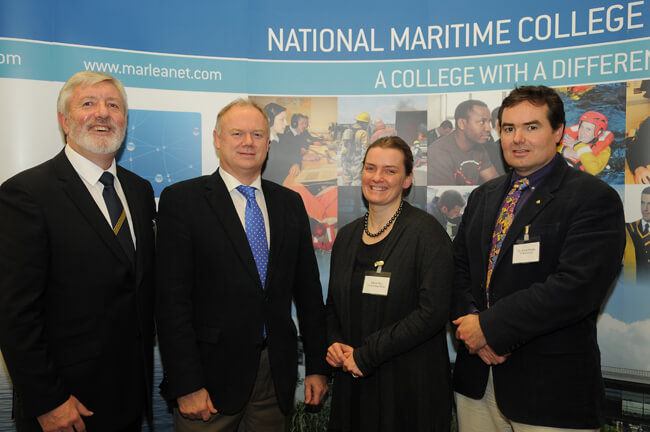
Capt Michael McCarthy, Port of Cork; Capt Bill Kavanagh, NMCI; Alison Kay, Trinity College Dublin and Dr Trevor Dobbins, High Speed Craft, UK
Gráinne Lynch who is responsible for research development at the National Maritime College of Ireland in Ringaskiddy - the outreach college for MarLeaNet in Ireland, which hosted the workshop - explains that because maritime training centres generally exist independently of one another – reporting solely to their own authorities – there is often no connection between what the maritime industry needs and what educational institutes are providing.