
Environmental ostrich syndrome is alive and well in Ireland
No sooner has the subject of domestic water charges faded into the background noise of the wider political debate it emerges in another guise and triggers some politicos into a predictable knee-jerk response.
The subject of on-site, waste-water treatment systems – or septic tanks to you and me – would cause the best of us to switch off.

Aquaculture to play a major part in providing seafood security under the next fisheries policy
Dr Peter Heffernan, MI; Commissioner Maria Damanaki; Minister Simon Coveney; Commissioner Maire Geoghegan-Quinn and Jim Fennell, MI.
Outlining Common Fisheries Policy reform proposals to Irish stakeholders in Dublin recently, EU Maritime Commissioner Maria Damanaki said the new policy must preserve stocks in a responsible, science-based way.
She spoke bluntly about the status of fish stocks throughout European waters: “If nothing changes, only eight out of 136 stocks will be at sustainable levels by 2022.”
Not only would small-scale fisheries be affected but jobs would be lost across processing, transport, port infrastructure, packaging and retail.
She noted however the crucial role that aquaculture could play in reducing the amount of seafood imported into Europe:
“Ireland’s fish-farming industry, worth €100m, deserves proper funding to help produce the excellent salmon, trout and shellfish that it farms and consumers expect,” she said.
“I will be establishing an “open method” to allow national authorities to exchange best practices “to ensure business security.”

Minister Varadkar supports Irish bid for EU Coast Guard Secretariat
Transport Minister Leo Varadkar is supporting an Irish bid for a new European Coast Guard secretariat to be permanently based in Dublin.
Chris Reynolds, director of the Irish Coast Guard, has been appointed chair of the European Union Heads of Coast guard which next year will host its annual meeting in Dublin.
European surveillance service finally gets the green light
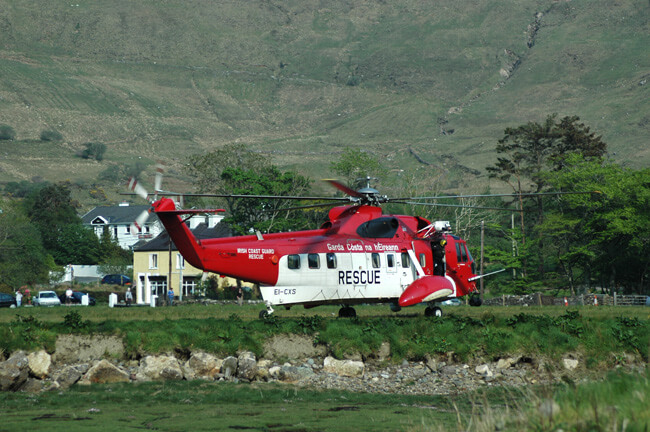
Irish Coast Guard helicopter during a rescue demonstration in Leenane, Co Galway. Photo Gillian Mills/Inshore Ireland
John Cushnahan
When I proposed the establishment of a European Coastguard Service in the European Parliament in June 1993, the response of the European Commission was less than enthusiastic.
In response to my suggestion, the Commission stated: ‘No Member State has ever proposed that a European Coastguard Service be established .......and the European Commission has no intention of changing the existing situation.’
 https://oceanfocus.ie/wp-content/uploads/2020/05/Ocean_Focus_marine_Publication.png
0
0
Guest Writer
https://oceanfocus.ie/wp-content/uploads/2020/05/Ocean_Focus_marine_Publication.png
Guest Writer2011-09-13 16:05:502019-02-13 17:49:30Reasons to be cheerful….. part one!
https://oceanfocus.ie/wp-content/uploads/2020/05/Ocean_Focus_marine_Publication.png
0
0
Guest Writer
https://oceanfocus.ie/wp-content/uploads/2020/05/Ocean_Focus_marine_Publication.png
Guest Writer2011-09-13 16:05:502019-02-13 17:49:30Reasons to be cheerful….. part one!
The lure of salmon keeps the angler returning time after time after time…
Brendan Connolly
Salmon are the regal rulers of the river. Streamlined bars of shimmering silver that mysteriously appear from the sea, they ascend the rivers, slicing effortlessly through rapids and vaulting over waterfalls.
The lure to land a salmon can mean hours on the river bank
These exotic fish lay their bright orange eggs in gravel, where they hatch and feed for two to three years. During this time, they can grow to 20-70 grams. In late winter/early spring, salmon parr turn silver and instead of swimming against the current they turn to swim with the flow and out to sea. In the sea their growth rate increases dramatically, growing from 3-15 lbs or more in the same time it took to grow to 30-40g in the river. Transformed into big adult salmon, they then navigate their way back to their spawning river.
€250m development plan proposed for Dún Laoghaire Harbour
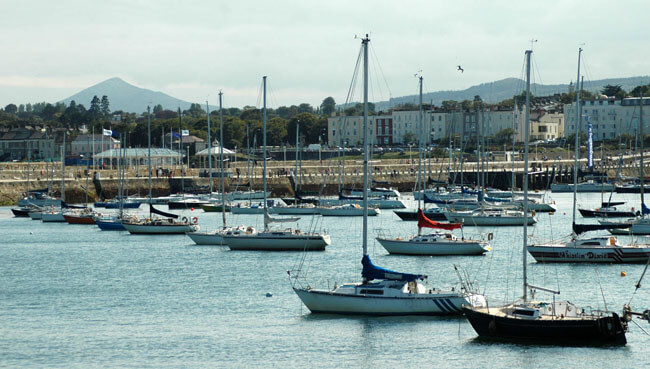
Dún Laoghaire Harbour Company is preparing a masterplan to address a changing emphasis from a commercial to a recreational harbour and to ensure its medium to long-term sustainability. The harbour is widely recognised as one of the finest man-made harbours in the world.
Subject to approval and planning permission being granted, an estimated 2,800 full-time jobs will be created during the ten-year roll-out phase (1,400 on site, 600 via suppliers and 800 in the wider economy in retail/services). When fully operational, businesses have the potential to employ 1,400 full-time persons, according to DKM Economic Consultants who are part of the Project Team.
Public opinion favours full integration of the harbour with the town. Photo Gillian Mills/Inshore Ireland
Public input
An initial survey of pier users and an on-line questionnaire attracted over 500 responses which answered questions on themes including tourism, marine leisure, heritage conservation and the environment. Main concerns centred on: improved toilet facilities; better tourist-friendly approach; introduction of bicycle lanes; refurbishment or removal of the baths; live music events; improved public access to sailing activities; cheaper car parking and clean-up of pet fouling.

Offshore finfish farms – a game breaking opportunity?
Donal Maguire
With the backing of the Minister for Agriculture, Food and the Marine, Simon Coveney, and in line with the actions set out under the department’s visionary ‘FOOD HARVEST 2020’ strategy, BIM and the Marine Institute are embarking on an ambitious project to fast-track development of one or more, large-scale offshore marine finfish production units off the west coast of Ireland.
Highly automated offshore production nodes with fish cages and service platforms for personnel to transform Irish aquaculture. Artist's impression, BIM
It is envisaged that these production units, which will each eventually generate in excess of 15,000 tonnes annually, will be located outside of any Natura 2000 designations, in areas with very high water exchange, remote from any possible negative interactions with migratory fish and be virtually invisible from the land. In the Minister’s words, the intention is to make a “game changing breakthrough in the development of Irish aquaculture”.
Commission enforcement of EU Environmental legislation in Ireland – a 20 year retrospective
The following is an abridgment of a presentation made by Liam Cashman, Legal Affairs and Cohesion, DG Environment to a Coastwatch seminar in Dublin last spring.