Pollution investigation stalls due to agency refusal to increase funding
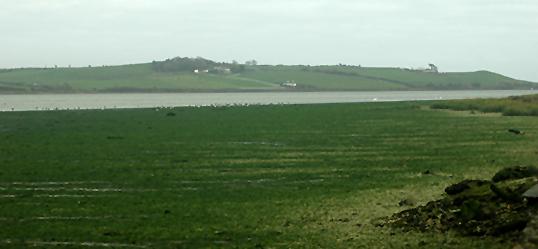
The author of a report that was to be funded by the Environmental Protection Agency (EPA) but was never published, stands by its main finding that human faeces are largely responsible for recurring green tides in the Argideen river estuary at Courtmacsherry, Co Cork.
The inherent increase in sewage waste is most probably responsible for the nutrient enrichment in the Argideen River estuary, and the lack of adequate sewage treatment facilities in the area has further enhanced the problem.
In early 2007 Dr Stefan Kraan, then manager of the Irish Seaweed Centre at NUI-Galway, lead a team of scientists in a bid to pinpoint the orgin and type of pollutant causing the macro algae green tide, Ulva. Ulva is common around the Irish coast but it began to appear in usually high quantities on beaches in the inner Courtmacsherry Bay in the mid-1990s, mainly on the sheltered tidal flats onto which the Argideen and Kilbrittan rivers drain.

Stakeholders must be central to a reformed Common Fisheries Policy
The EU Commission decision in April to adopt a Green Paper on the reform of the Common Fisheries Policy has been welcomed, if cautiously, by the Federation of Irish Fishermen.
Proceedings from the organisation’s review seminar in October notes starkly: ‘Ireland had put consideratble effort into previous CFP reviews, but the the outcome never met expectations which led FIF to think a new approach was needed when structuring.'
Sean O'Donoghue, CEO of the Killybegs Fishermen's Organisation and FiF's current chairman
A key player representing Ireland in the complex intra-community horse-trading now well underway is Sean O’Donoghue, CEO of the Killybegs Fishermens Organisation and FIF’s current chairman.
A veteran of fisheries management who worked in the Department of the Marine and for BIM for over twenty years before taking over the KFO helm in 2000, few would match his grasp of the complexities of the CFP reform discussions.
Independent study says Ireland’s mapping project is value for money
According to Gareth Hetherington of Pricewaterhouse Coopers who carried out an options appraisal report into the INFOMAR mapping programme, their analysis over a 20-year period of the current value of benefits is estimated at €440m.
“This in ratio to cost is approx 4/5:1 so the return on the capital employed is quite good. We’re looking at industry as an exercise or project that can help generate economic activity in light of the recession. [These] are basically the types of projects which all governments say they want to fund,” he emphasised.
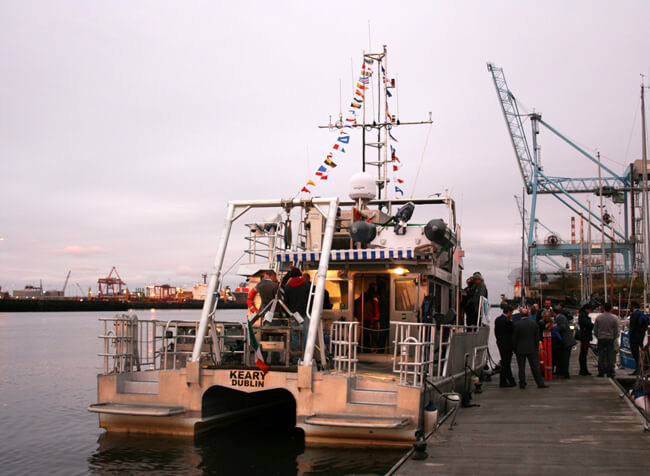
RV Keary was officially named by Barbara Keary, wife of the late Ray Keary, at the Poolbeg Marina in the heart of Dublin. Photo Gillian Mills/Inshore Ireland
“If the private sector was left to undertake the seabed mapping study, the cost associated [to deliver] a project of this nature would be so disproportionate to the financial benefits it wouldn’t be worth their while.”
Gareth Hetherington was speaking at the ten-year celebration seminar of the Irish National Seabed Survey (INSS) and INFOMAR.

Cork reports robust cruise business despite economic downturn
John Hearne
Brendan Keating took an atypical route to his stewardship of the Port of Cork Company. A native of Galway, he completed his secondary education in Rockwell College in Tipperary before taking a B Comm in University College Galway.
He then embarked on a career in local government which saw him move from Meath to Cork, where he was assistant city manager, before moving north to Limerick, where he became city manager in 1999.
Returning to Cork in 2002 to become chief executive of the port company, he says that all those years in local government have proved invaluable.

Showcase of sail bound or Belfast
Excitement is mounting for the Belfast Maritime Festival, Tall Ships Atlantic Challenge 2009 which will be sailing into Belfast from August 13-16.
The festival promises to have something for everyone as Dr Gerard O’Hare, chairman of the Tall Ships board explained:
“The festival will be offer a fantastic array of activities and entertainment for children, families, sailing enthusiasts and everyone looking for a good day out. There will be continental markets; a seafood festival; exhibitions; fun fairs; concerts at Custom House Square; fireworks and much more. It promises to be one of the most memorable and exciting events in 2009.”
 https://oceanfocus.ie/wp-content/uploads/2020/05/Ocean_Focus_marine_Publication.png
0
0
Guest Writer
https://oceanfocus.ie/wp-content/uploads/2020/05/Ocean_Focus_marine_Publication.png
Guest Writer2009-05-29 15:10:292019-02-13 17:24:46V-notch scheme: The Dunmore perspective
https://oceanfocus.ie/wp-content/uploads/2020/05/Ocean_Focus_marine_Publication.png
0
0
Guest Writer
https://oceanfocus.ie/wp-content/uploads/2020/05/Ocean_Focus_marine_Publication.png
Guest Writer2009-05-29 15:10:292019-02-13 17:24:46V-notch scheme: The Dunmore perspective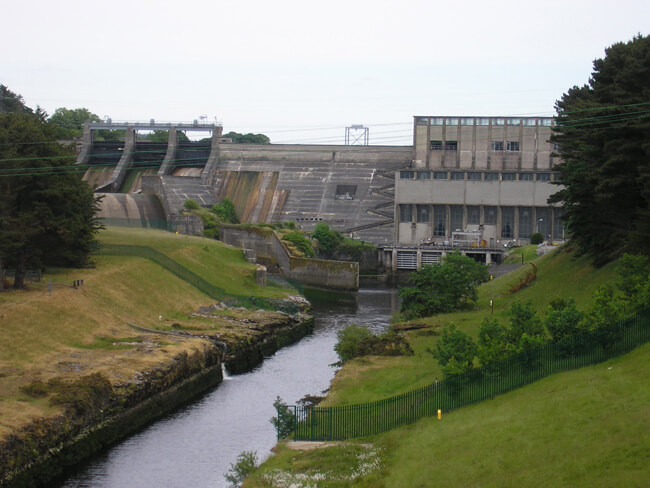
Ranched salmon – a blueprint for future management?
A proposal to allow hatchery-reared ranched salmon to be captured by draft net in the Erne Estuary, which has the potential to develop into a lucrative operation, is gaining widespread local support; however local politicians and government so far appear to lack the enthusiasm for the project.
A consultant-prepared draft management plan entitled ‘A proposal for the management of the salmon on the Erne Estuary’, which has been seen by Inshore Ireland, makes a convincing argument that Ballyshannon’s once substantial draft-net salmon fishery should be revived, but for hatchery-reared ranched fish only.
Kathleen Falls Dam with tail race and outflow pipe from hatchery. Photo Brendan Connolly
The report proposes that wild salmon and seatrout would not be targetted and that only ranched salmon released as hatchery-reared smolts to the open sea, identifiable by a clipped adipose fin, would be caught.
Government abandons ‘model approach’ to coastal zone management
Shay Fennelly
According to a report published in 2004 – Review of Integrated Coastal Zone Management & Principles of Best Practice (CMRC) and the subject of this paper’s first lead story in January 2005 – there has been ‘no advances in policy or legislative developments for ICZM since the publication of the draft policy for Ireland in 1997.’
And the ongoing cost and controversy surrounding the Corrib gas project is testament to the lack of an adequate framework to resolve coastal planning issues in Ireland.
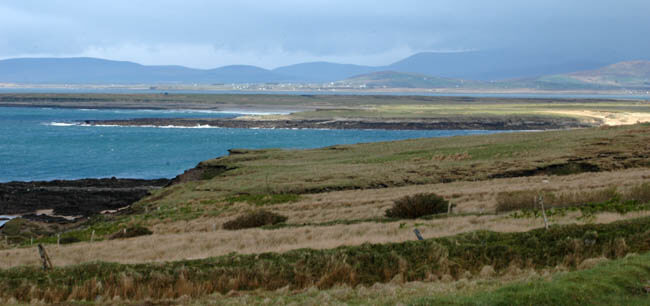
No advances in policy of legislative developments for ICZM since the publication of the draft policy for Ireland in 1997. Photo Gillian Mills
The government abandoned a model approach for facilitating dialogue in relation to Integrated Coastal Zone Management, which if implemented in 2003 with the Corrib gas project, could have reduced or even avoided the €13 million and rising Garda policing bill now facing the taxpayer.
https://oceanfocus.ie/wp-content/uploads/2020/05/Ocean_Focus_marine_Publication.png
0
0
Guest Writer
https://oceanfocus.ie/wp-content/uploads/2020/05/Ocean_Focus_marine_Publication.png
Guest Writer2009-05-18 16:16:532019-02-13 17:25:03Marine industry can influence recovery of Irish economy