
 https://oceanfocus.ie/wp-content/uploads/2020/05/Ocean_Focus_marine_Publication.png
0
0
Guest Writer
https://oceanfocus.ie/wp-content/uploads/2020/05/Ocean_Focus_marine_Publication.png
Guest Writer2013-02-10 12:05:052019-02-14 10:45:38KFO contends herring fishery management is bias against dedicated pelagic vessels
https://oceanfocus.ie/wp-content/uploads/2020/05/Ocean_Focus_marine_Publication.png
0
0
Guest Writer
https://oceanfocus.ie/wp-content/uploads/2020/05/Ocean_Focus_marine_Publication.png
Guest Writer2013-02-10 12:05:052019-02-14 10:45:38KFO contends herring fishery management is bias against dedicated pelagic vessels
Study finds sea lice not a significant factor in decline of wild salmon
A nine-year investigation by the Marine Institute into the possible causes of the steep decline in the survival rate of Atlantic salmon at sea concludes that sea lice infestation plays a relatively minor role - accounting for only 1% of overall marine mortality rate in the stocks studied, or ten fish in a thousand.
Inland Fisheries Ireland, another State agency, but charged with responsibility for the protection, management and conservation of inland fisheries and sea angling resources however says that this 1% “maybe the crucial tipping point”.
Donal Maguire, Aquaculture Development Manager with BIM, speaking at the public meeting and debate on the proposed Galway Bay Salmon Farm held at the Nuns Island Theatre, Galway. Photo Joe O'Shaughnessy, courtesy of The Connacht Tribune
Dr David Jackson who manages the Marine Institute’s Aquaculture Section and is in charge of the National Sea lice Monitoring and Control Programme confirmed to Inshore Ireland that the study, which involved over 350,000 migrating salmon from twenty-eight releases at eight locations on Ireland’s south and west coasts between 2001 and 2009, “provides clear evidence that while sea lice-induced mortality on outwardly migrating smolts can be significant, it is a minor and irregular component of marine mortality in the stocks studied and is unlikely to be a significant factor influencing conservation status of salmon stocks”.
https://oceanfocus.ie/wp-content/uploads/2020/05/Ocean_Focus_marine_Publication.png
0
0
Guest Writer
https://oceanfocus.ie/wp-content/uploads/2020/05/Ocean_Focus_marine_Publication.png
Guest Writer2013-01-18 14:08:172019-02-14 10:44:40Enhancing discard survival rate of nephrops
https://oceanfocus.ie/wp-content/uploads/2020/05/Ocean_Focus_marine_Publication.png
0
0
Guest Writer
https://oceanfocus.ie/wp-content/uploads/2020/05/Ocean_Focus_marine_Publication.png
Guest Writer2012-09-03 14:49:112019-02-14 09:23:25Small is beautiful, but fluffy round the edges…
https://oceanfocus.ie/wp-content/uploads/2020/05/Ocean_Focus_marine_Publication.png
0
0
Guest Writer
https://oceanfocus.ie/wp-content/uploads/2020/05/Ocean_Focus_marine_Publication.png
Guest Writer2012-09-03 14:31:502019-02-14 09:19:55EU fisheries ministers quash proposed privitisation of fish quotas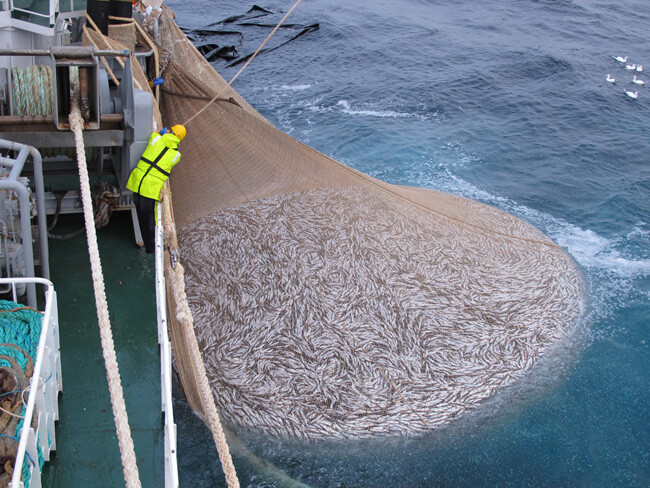
Fisheries Council agrees all-species landing, starting with pelagics in January 2014
An agreement by the Council of Fisheries Ministers to a landing obligation of all fishing vessels for all quota species beginning with pelagic fisheries from January 1, 2014, has been described as a “flawed approach” by the Federation of Irish Fishermen (FIF) as a method to address the complexissue of fish discards.
A fine haul of herring alongside mfv Vigilant. The June Council of Fisheries Ministers agreed a landing obligation of all vessels for all quota species, beginning with pelagics in January 2014. Photo John Cunningham
“This approach is impractical and unworkable,” remarked their chief executive who added there was agreement throughout the European-wide fishing industry that discarding needed to be reduced “to the lowest level possible”.

Former fishing industry representative recalls the complexities of the sector
Locán Ó Cinnéide’s career path has never vered far from the the heart of Ireland’s seafishing industry: whether as a commercial fisherman; a fishing industry development executive; or independent business man.
By now this Kerryman’s face and voice are recognised in every port in Ireland – as one of the fishing industry’s most senior representatives. He is highly respected at home and abroad.
Is ‘mis-management’ and ‘lost opportunity’ rife within Ireland’s Fishery Harbour Centres?
Inshore Ireland sent the following questions to the Department of Agriculture, Food and the Marine on foot of issues arising in a Dáil Submission of January 2012 by John Shine and Sean Doran of ‘Fishing for Jobs:
(Full text: http://www.facebook.com/profile.php?id=100002313756109)
Howth Fishery Centre. Photo Gillian Mills
Marine department update on status of inshore fisheries management
Inshore fisheries management: a tale of lost opportunity (II Oct/Nov 2010) focused on the status of inshore fisheries in Ireland which comprises most of the registered vessels in the Irish fleet.
In 2005, a Shellfish Management Framework was introduced, designed to provide an integrated co-management structure to deliver responsible and effective management. Six years on and no regulatory system has been put in place. Many stocks remain fully exploited and catch rates have declined to a level that is adversely affecting the economic viability of the fleet.

The majority of Roundstone's inshore fleet targets lobster and shrimp. Photo Gillian Mills
Against this backdrop Inshore Ireland invited the Department of Agriculture, Food and Marine to address these concerns. Now six months later Inshore Ireland has returned to DAFM to establish if any changes have occurred in the intervening months: