
Leading provider to the UK offshore wind-farm sector, Fastnet Shipping is poised for Irish take-off
Leading Irish marine plant andwind farmsupport vessel operator, Fastnet Shipping Limited, has taken delivery of its third windfarm, survey and dive support vessel, Fastnet Skua, which went straight to work on a 75 turbine, 270MW windfarm 8 kilometers off the Lincolnshire coast at Skegness. A fourth sister vessel FastnetPuffin,will be launched and operationalin Q3, 2012 for work in the UK/ European offshore windfarm market.
Fastnet Skua
Based in Waterford, this fifth-generation family company has more than 50 years experience operating and chartering vessels and marine plant for dredging; harbour and coastal towage; crew transfer; transport and offshore logistics. During the busy summer months, the company would employ up to 30 staff who would be active in the UK and Western Europe in Belgium, France and The Netherlands.
Dawn breaks on an Integrated Marine Plan for Ireland
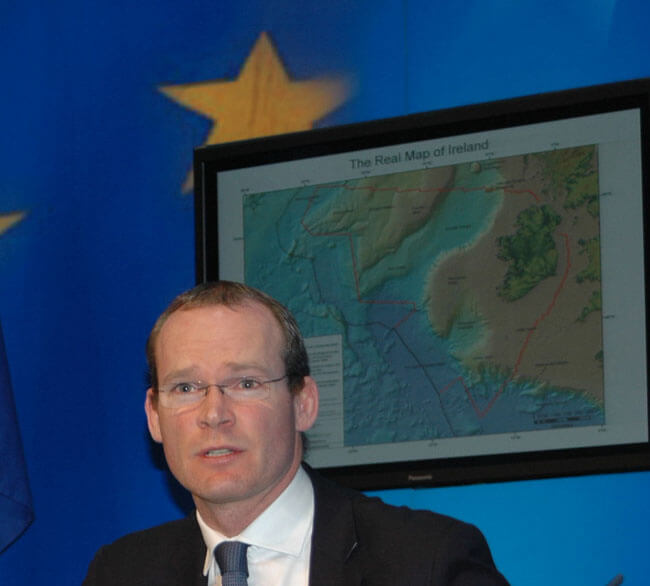
In an exclusive interview with Inshore Ireland, Minister Simon Coveney outlines some of the finer points of the government's document Our Ocean Wealth, which invites public opinion on new ways, new approaches and new thinking to develop Ireland’s maritime resources.
Why has government undertaken this public consultation process?
A number of months ago we embarked on putting together an integrated marine plan for Ireland, and one of the things I wanted to do was to dramatically increase the priority and focus on the marine resources that we have.
Simon Coveney, Minister for Agriculture, Food and the Marine launches Our Ocean Wealth. Photo Gillian Mills
Taking our seabed into account, Ireland is one of the largest states in the EU with sovereign or exclusive rights over one of the largest sea to land ratios at ten: one. Our land resource is 90,000 km2, but our marine resource is 900,000 km2. And at 7,500km, our coastline is longer than that of most European countries.

Seaweed protein, properties and possibilities in aquaculture
Dr Stefan Kraan
Ocean Harvest Technology
Seaweed is a natural and sustainable ingredient with a lot of different functional biological properties, amongst them protein. Protein are biochemical compounds comprising one or more polypeptides typically folded into a globular or fibrous form that facilitate biological functions in the body.
Although the structure and biological properties of seaweed proteins are still poorly documented, the amino acid compositions of several species have been known for a long time. Habitat – and especially seasonal variation – has an effect on proteins, peptides and amino acids in seaweed.
Small fish being tested with seaweed protein pellets
The protein fraction of seaweed varies with the species but is generally low in brown seaweed, <15%. Higher protein contents are recorded for green and red seaweed, up to 40%. These levels are comparable to those found in high-protein vegetables such as soybeans.
A case of ‘NIMBY-ism’ or justifiable concern?
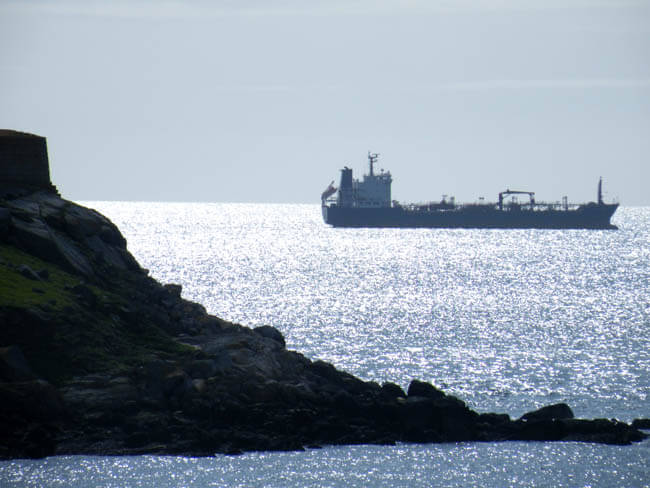
In this view of a vessel passing Dalkey Island, it shows an approximate direction of the proposed exploratory drill-rig, some 6km offshore of the Dublin Bay coastline. Photo Jehan Ashmore
& Gillian Mills
Upwards of 500 residents, business people and politicians turned out for two information meetings in Dalkey and Dún Laoghaire, Co Dublin last month, and agreed unanimously to call on Phil Hogan, Minister for Enterprise and Local Government, to hold a Public Inquiry into the application by Providence Resources for a foreshore licence to explore the potential of an oil and gas prospect circa 6km off the coast of Dublin in an area known as the Kish Bank Basin.
Providence Resources were invited to attend both meetings but declined, saying in a statement they were willing to discuss the issue with small groups at their Donnybrook Headquarters.
Former fishing industry representative recalls the complexities of the sector
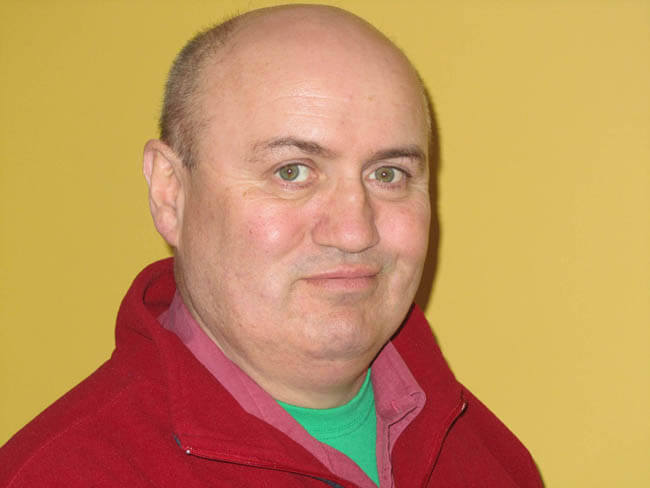
Locán Ó Cinnéide’s career path has never vered far from the the heart of Ireland’s seafishing industry: whether as a commercial fisherman; a fishing industry development executive; or independent business man.
By now this Kerryman’s face and voice are recognised in every port in Ireland – as one of the fishing industry’s most senior representatives. He is highly respected at home and abroad.
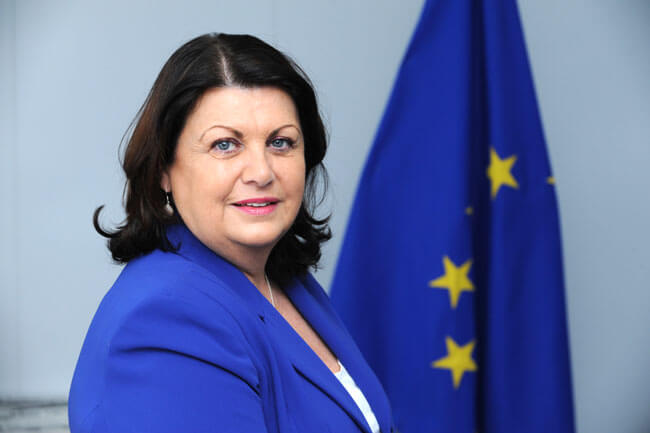
Ireland’s Commissioner says research and innovation policy heads up the political agenda
In November 2009 when European Commission President Mario Barosso offered Ireland’s Máire Geoghegan-Quinn the powerful Research, Innovation and Science portfolio it’s probably true to say that a few eyebrows were raised at home.
And while few doubted Geoghegan-Quinn’s ability to survive in the Brussels hot house, the question was how would someone like her, with no obvious interest or experience in science research, come to grips with one of the Commission’s most wide-ranging, energy-sapping and intellectually-demanding jobs.
Maire Geoghegan-Quinn, EU Commissioner for Research, Innovation & Science
Two years on however, such doubts have long disappeared and Commissioner Geoghegan-Quinn shows no signs of being a fish out of water. On the contrary, she continues to demonstrate a phenomenal energy and an enviable ability to master even the most complex brief, and is seen to be one of the Commission’s best performers.

Is ‘mis-management’ and ‘lost opportunity’ rife within Ireland’s Fishery Harbour Centres?
Inshore Ireland sent the following questions to the Department of Agriculture, Food and the Marine on foot of issues arising in a Dáil Submission of January 2012 by John Shine and Sean Doran of ‘Fishing for Jobs:
(Full text: http://www.facebook.com/profile.php?id=100002313756109)
Howth Fishery Centre. Photo Gillian Mills

Seaweed biomass cultivation likely to replace finite fossil fuels
Stefan Kraan, Ocean Harvest Technology
Total worldwide energy consumption today is roughly 480 exajoules with almost 90% derived from the combustion of fossil fuels. Fossil fuels such as coal, oil and natural gas are limited in supply and will one day be depleted. As a result, the quest for renewable energies – being energies generated from sustainable natural resources such as sunlight, wind, tides, etc and from industrial or urban waste and biomass – began decades ago.
In 2007, the 27 member states of the EU decided that 20% of its energy should come from renewable sources by 2020 (Lisbon Treaty).
The table above shows global energy consumption and its estimated increase by 2050, and the worldwide potential of biomass for energy production based on recent studies. This clearly indicates the need for aquatic biomass to fulfil our energy consumption in a renewable and sustainable way
At sea biomass production
Since the available area for cultivation at sea is so much greater than on land (70% of the earth’s surface is ocean) and with macroalgae growth rates being much higher than of conventional land crops, the potential for biomass production at sea is enormous.
Marine department update on status of inshore fisheries management
Inshore fisheries management: a tale of lost opportunity (II Oct/Nov 2010) focused on the status of inshore fisheries in Ireland which comprises most of the registered vessels in the Irish fleet.
In 2005, a Shellfish Management Framework was introduced, designed to provide an integrated co-management structure to deliver responsible and effective management. Six years on and no regulatory system has been put in place. Many stocks remain fully exploited and catch rates have declined to a level that is adversely affecting the economic viability of the fleet.

The majority of Roundstone's inshore fleet targets lobster and shrimp. Photo Gillian Mills
Against this backdrop Inshore Ireland invited the Department of Agriculture, Food and Marine to address these concerns. Now six months later Inshore Ireland has returned to DAFM to establish if any changes have occurred in the intervening months: