
‘Out of date, marine licensing apparatus’ behind poor progress in marine sector
& Gillian Mills
A major conference in March organised by IMERC (the Irish Maritime and Energy Resource Cluster) focused on maritime security and shipping, logistics and transport. Addressing delegates, Val Cummins, IMERC director said it was important to take a holistic view of maritime economics in Ireland and commended the marine minister, Simon Coveney TD, for the ‘much needed’ Integrated Marine Plan for Ireland.
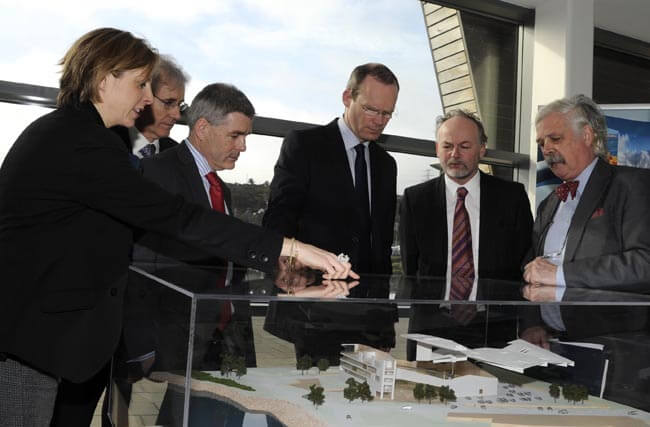
Dr Valerie Cummins; Dr Brendan Murphy; Mark Poland; Minister Simon Coveney; Niall McAuliffe and Prof Tony Lewis
“Up until now, we have lacked political leadership and vision for maritime Ireland. It is great to have a Minister at the helm committed to the development of ambitious, long-term growth plans”, she stated.
Cumbersome and disjointed
Addressing deletes, Minister Coveney warned that Ireland could not afford to “rest on its laurels” if it's to become a world leader in the production of offshore energy generation, and blamed an “out-of-date, cumbersome and disjointed maritime licensing apparatus” for holding back progress up to now.
Donegal fishermen seek easing of salmon driftnet ban to save communities
A three-year plan to ‘save and maintain’ communities on the Donegal islands of Arranmore, Boffin and Tory is seeking ‘fair treatment of small island communities and respect for fishermen as providers of sustainable seafood and as custodians of our fisheries and the sea. We ask for responsibility and right to practice traditional livelihoods that are ecologically sustainable, socially just and culturally diverse and pass down our traditions, knowledge and skills to future generations.’
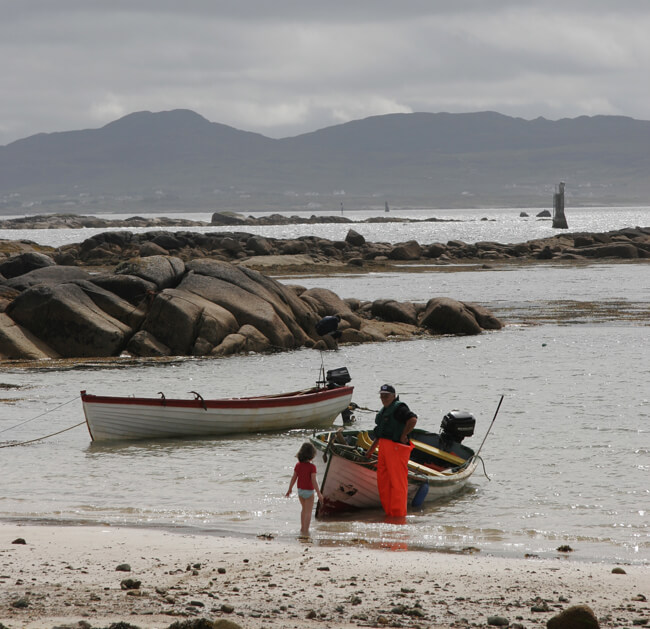
Arranmore. Photo Loic Jourdan of Lugh Films
The Donegal Islands Survival Plan, 2012 -2015 was presented to Dinny McGinley Minister for Arts, Heritage and the Gaeltacht at a conference on Árainn Mhór at the end of March.
The plan calls on government to look at creating opportunities by easing the 2006 ban on salmon fishing.
Coastal communities to be ‘empowered’ by new structural aid programme
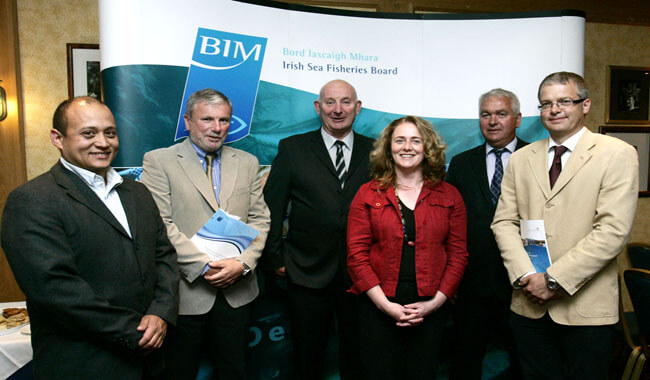
A “new departure” for structural aid specifically aimed at fisheries areas was unveiled to stakeholders in marine, maritime and fisheries industries at a launch in Dublin earlier this month.
Axis 4 – Sustainable Development of Fishery Dependent Areas Programme – is an ‘area-based approach’ introduced by the European Fisheries Fund (EEF) which reflects the complex and rapidly changing forces affecting fisheries areas and communities.
Central to the ‘area-based approach’ is the argument that the EU must be able to provide accompanying measures in conjunction with converting areas affected by the restructuring of the fisheries sector.
Axis 4 provides the EEF with such measures while the ‘area-based approach’ means that solutions can be adapted to the different situations and problems that exist in different parts.
 https://oceanfocus.ie/wp-content/uploads/2012/02/7.7maritime_Dun-Laoghaire.jpg
432
650
Guest Writer
https://oceanfocus.ie/wp-content/uploads/2020/05/Ocean_Focus_marine_Publication.png
Guest Writer2012-02-28 08:49:002019-02-14 09:05:32Dún Laoghaire Harbour Company presses ahead with plans despite opposition
https://oceanfocus.ie/wp-content/uploads/2012/02/7.7maritime_Dun-Laoghaire.jpg
432
650
Guest Writer
https://oceanfocus.ie/wp-content/uploads/2020/05/Ocean_Focus_marine_Publication.png
Guest Writer2012-02-28 08:49:002019-02-14 09:05:32Dún Laoghaire Harbour Company presses ahead with plans despite opposition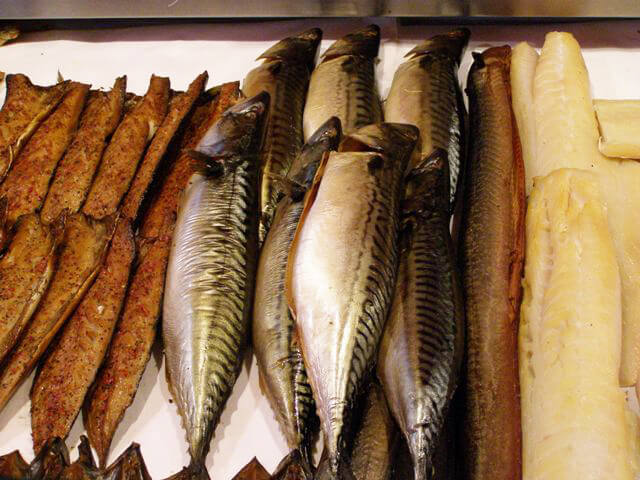
International trade in fishery products: the regulator’s viewpoint
SFPA
International trade in food is an important part of Ireland’s seafood industry with exports providing the market for approximately half of seafood produced in this country.
In contrast however, the EU is a net importer of seafood and is increasingly dependent on imports of fish and fishery products to meet its needs. In 2009, the EU imported €15.5bn fish and fishery products, accounting for more than 60% of its fish consumption.
Various species at Bergen fish market
All food of animal origin, including seafood, entering the EU from a ‘third country’ must pass through a designated entry point known as a Border Inspection Post (BIP). Food consignments are subject to checks at a BIP to ensure they adhere to the required food-safety standards and have been legally caught in the case of wild-captured fish.

Time for Ireland Inc to take responsibility for its own shortcomings
Eamon Ryan, leader of the Green Party
It is so easy to blame Europe. When something unpopular has to be done, it’s so easy to say: ‘It’s not us, I wouldn't do it myself, but Brussels is forcing me to do it.’
In that tradition, it would be very easy to disregard the analysis that Liam Cashman presented in the article carried in Inshore Ireland (August/September) in which he outlined his views on our historic failure to introduce and enforce proper environmental legislation.
Eamon Ryan, Green Party leader
We could respond by pitching the Commission as the bad guys who don’t understand the real world, are picking on us and letting everyone else off. But if we’re to be honest, we would take his analysis at face value and perhaps, just for once, admit that the problem lies with us and not with Brussels.
Is Ireland’s renewable energy programme folly, or based on fact?
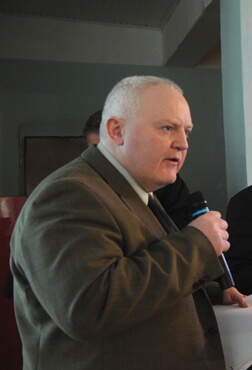
Pat Swords
The potential of Ireland becoming a leader in marine renewable energy research and production has received much coverage within these pages, most recently on the front-page of the last issue announcing that the world’s largest research centre – the Beaufort Centre - will be operating by 2013.
There are those, however, who challenge these claims as being ‘folly, not based on fact, and even contend some elements are questionable on legal grounds.
Pat Swords, Fellow of the Institute of Chemical Engineers
To debate the issue, Inshore Ireland invited a representative from opposing viewpoints; namely Pat Swords, Fellow of the Institute of Chemcial Engineers and a Chartered Environmentalist, and Peter Coyle, Chairman of the Marine Renewable Energy Association which represents many of those currently involved in the sector.
 https://oceanfocus.ie/wp-content/uploads/2020/05/Ocean_Focus_marine_Publication.png
0
0
Guest Writer
https://oceanfocus.ie/wp-content/uploads/2020/05/Ocean_Focus_marine_Publication.png
Guest Writer2012-01-03 13:50:072019-02-14 09:04:30Commissioner’s objective to ban all discards is “superficial and a PR driven approach”
https://oceanfocus.ie/wp-content/uploads/2020/05/Ocean_Focus_marine_Publication.png
0
0
Guest Writer
https://oceanfocus.ie/wp-content/uploads/2020/05/Ocean_Focus_marine_Publication.png
Guest Writer2012-01-03 13:50:072019-02-14 09:04:30Commissioner’s objective to ban all discards is “superficial and a PR driven approach”A seafood centre of excellence to drive added-value and innovation
A co-located, ‘one-stop-shop’ for seafood-related functions of the Department of Agriculture, Food and the Marine; the Sea-Fisheries Protection Authority and BIM’s business innovation and seafood product development activities has officially opened for business.
Officiating, Simon Coveney TD, the minister with responsibility for the marine, said his department was committed to ensuring “every effort was made to position Ireland to take full advantage” of the major opportunities available to its seafood sector. The UN estimates that world demand for seafood will rise by an extra 42 million tonnes annually from 2030.
Unveiling of the plaque at the National Seafood Centre
“I am focussed on firstly moving away from selling 85% of our seafood production in commodity form, and instead developing new high-value processed seafood products.”